If you could give someone in your life flowers, who would it be? Who would be honored? Whose lives are commemorated, and whose stories remain unseen?
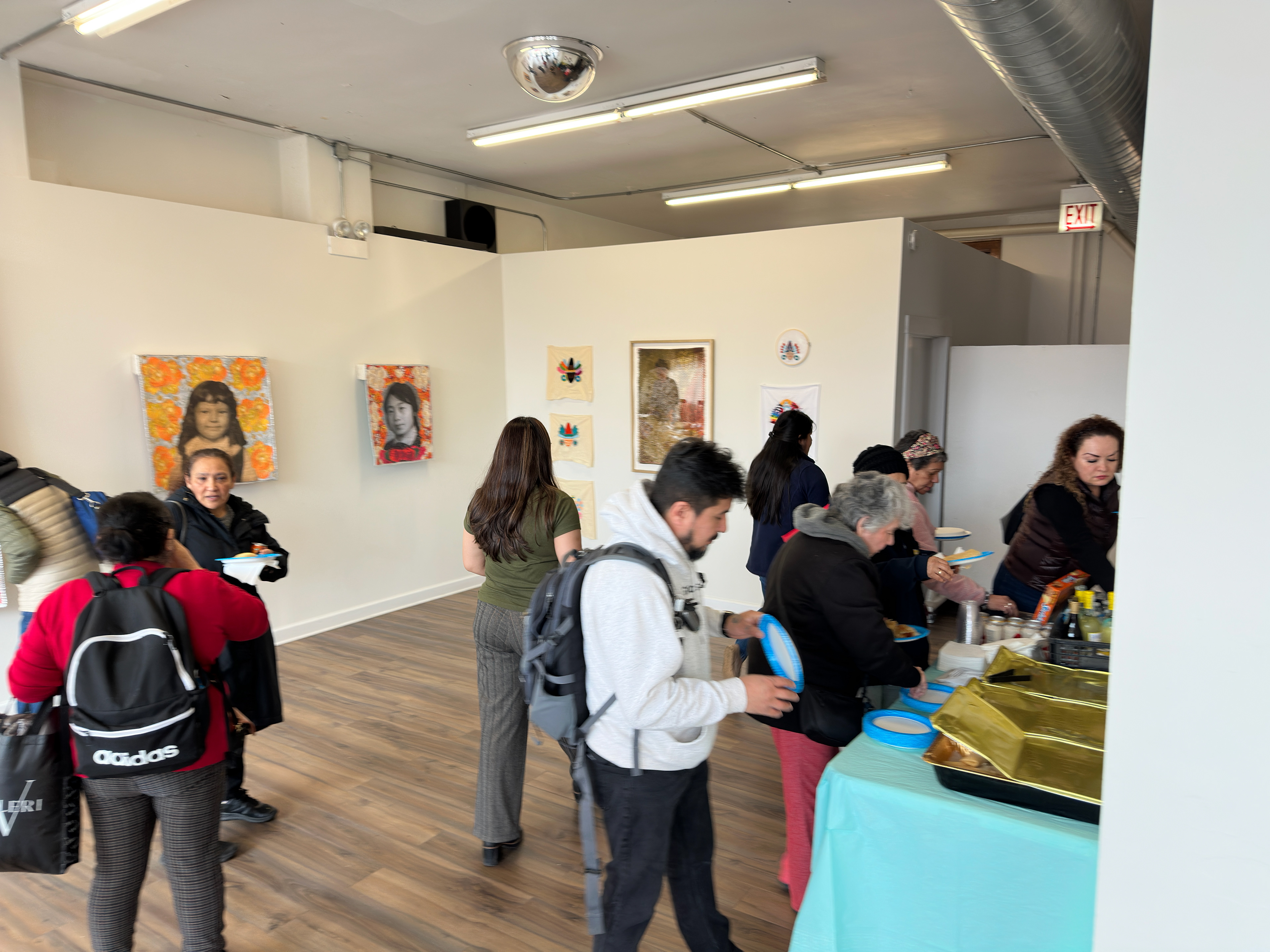
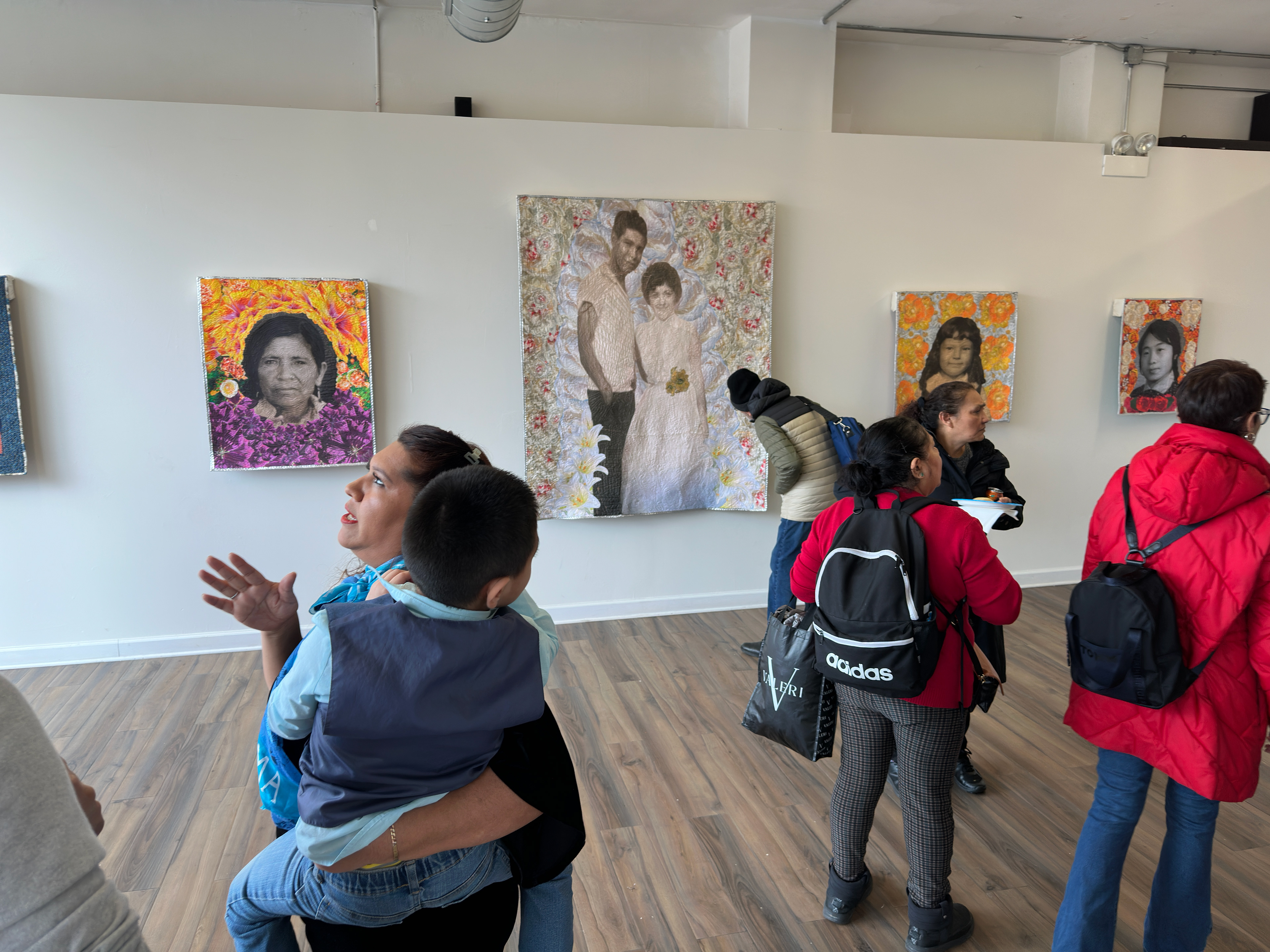
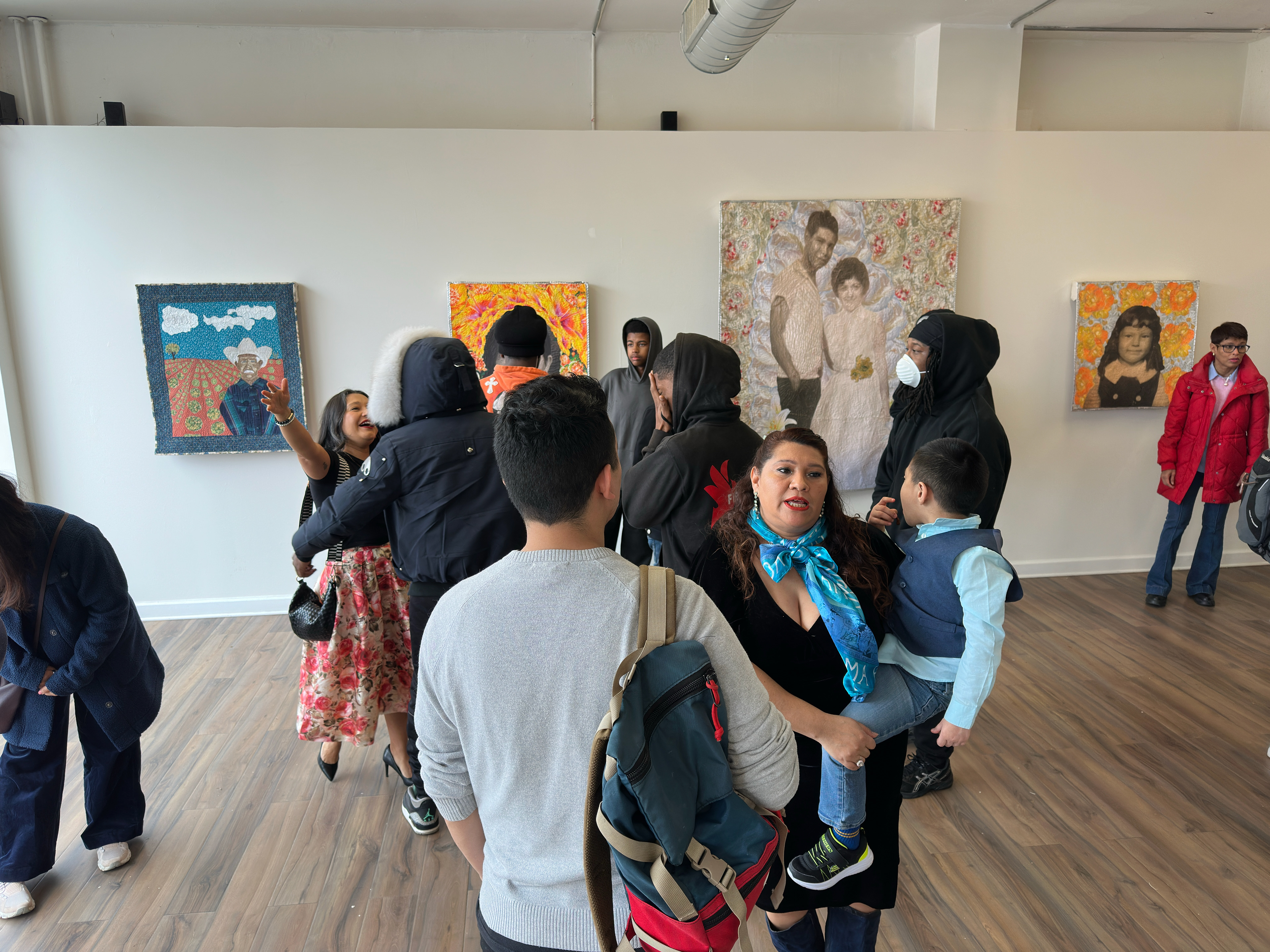
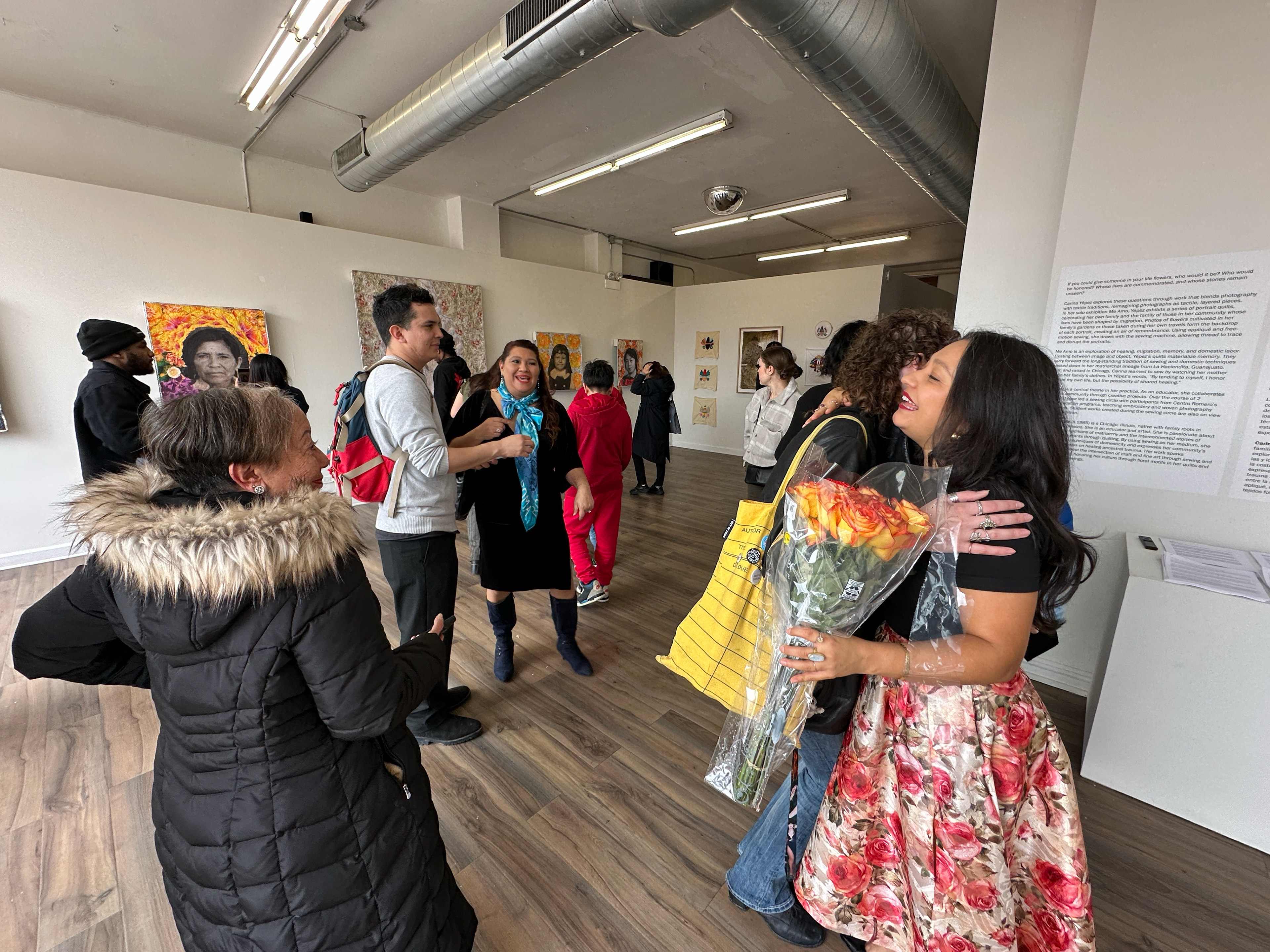
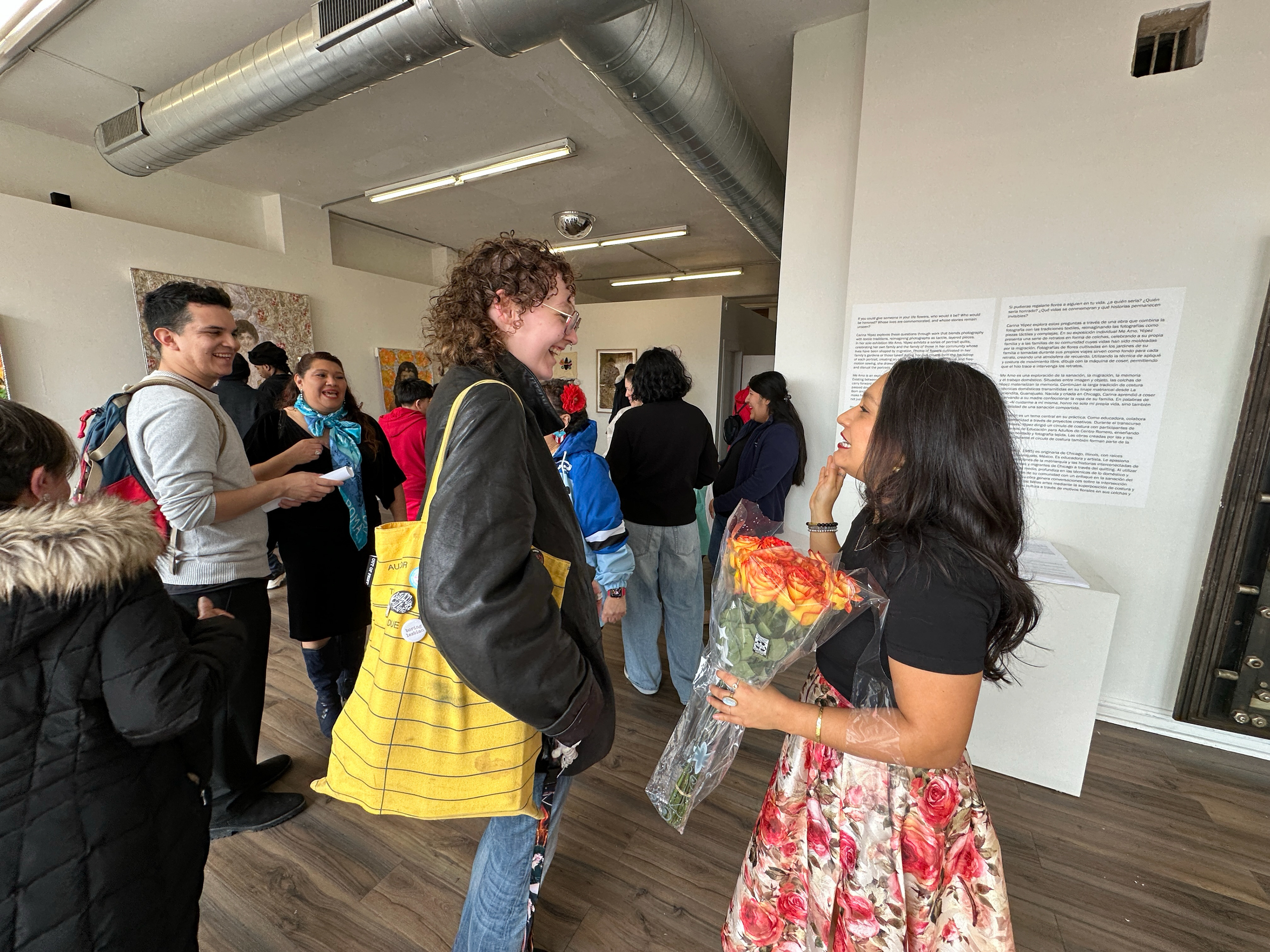
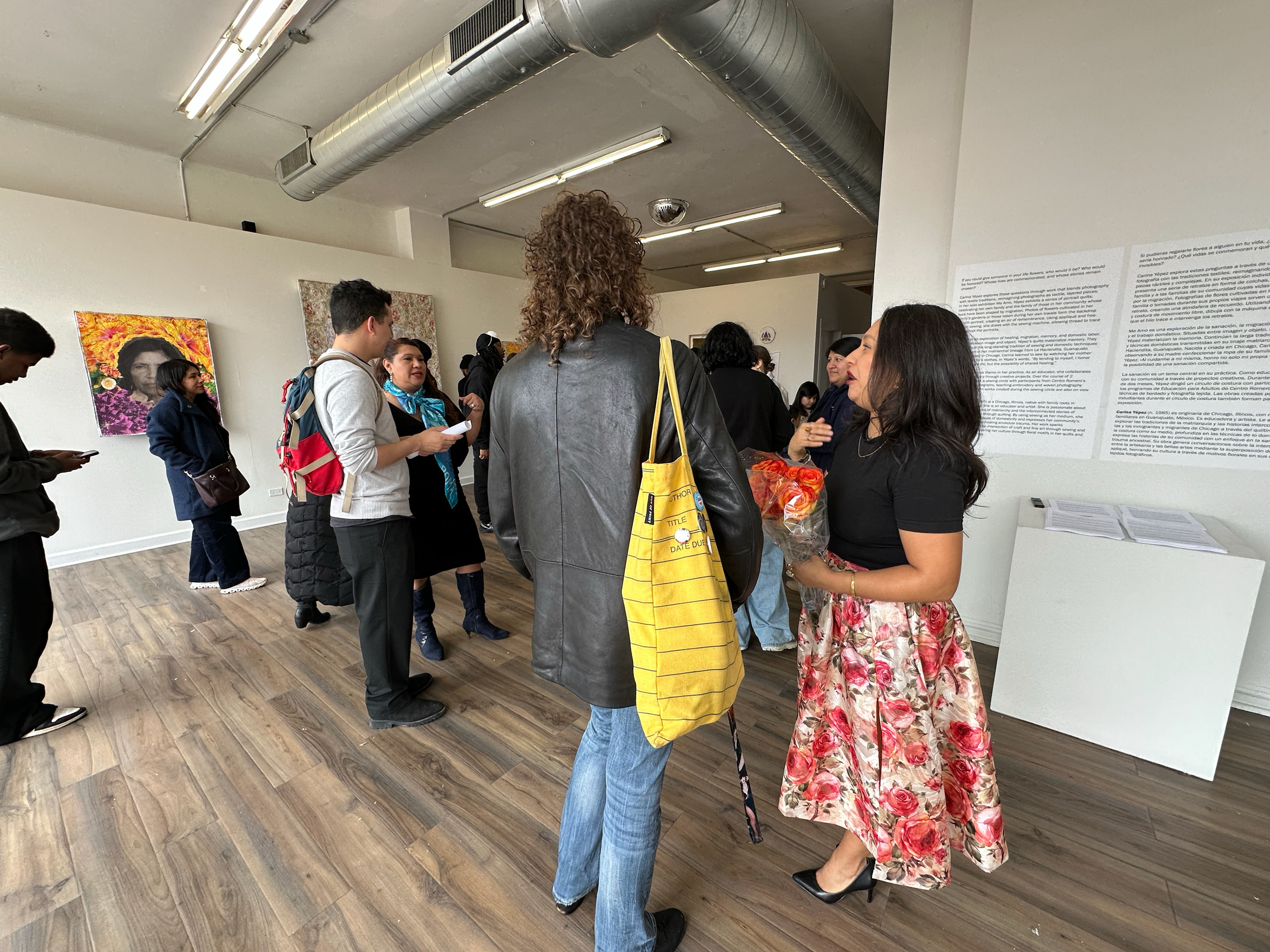
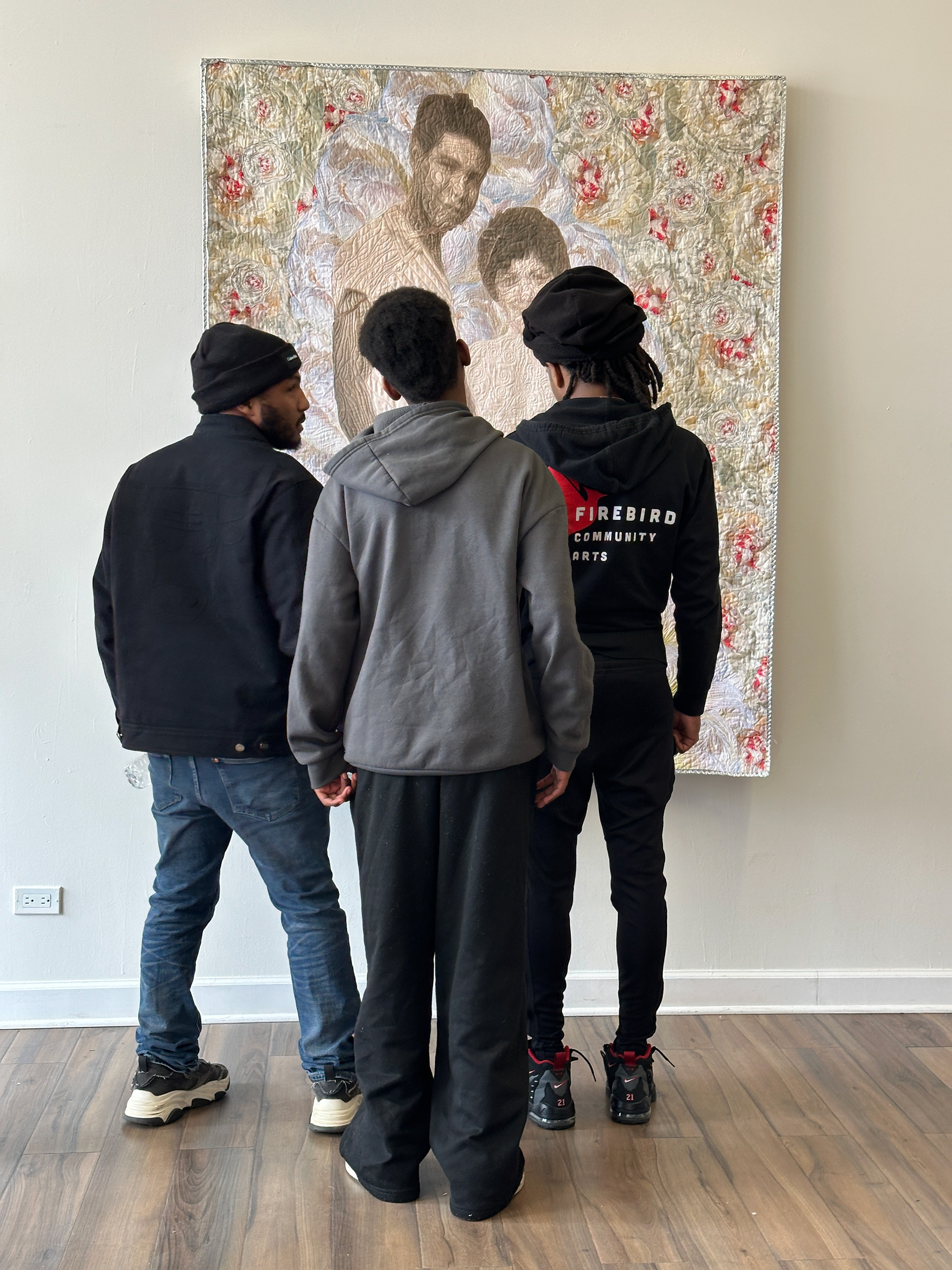
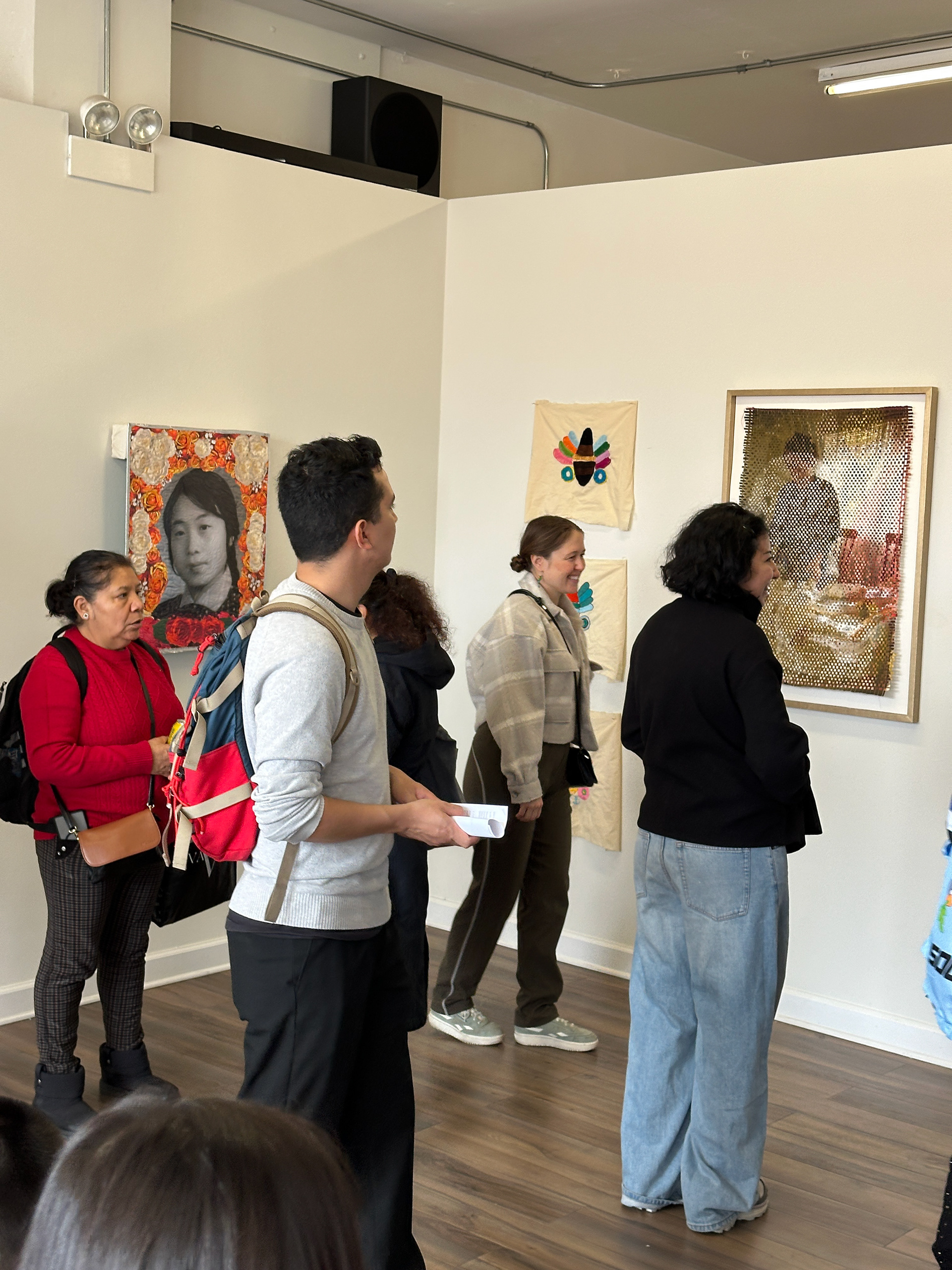
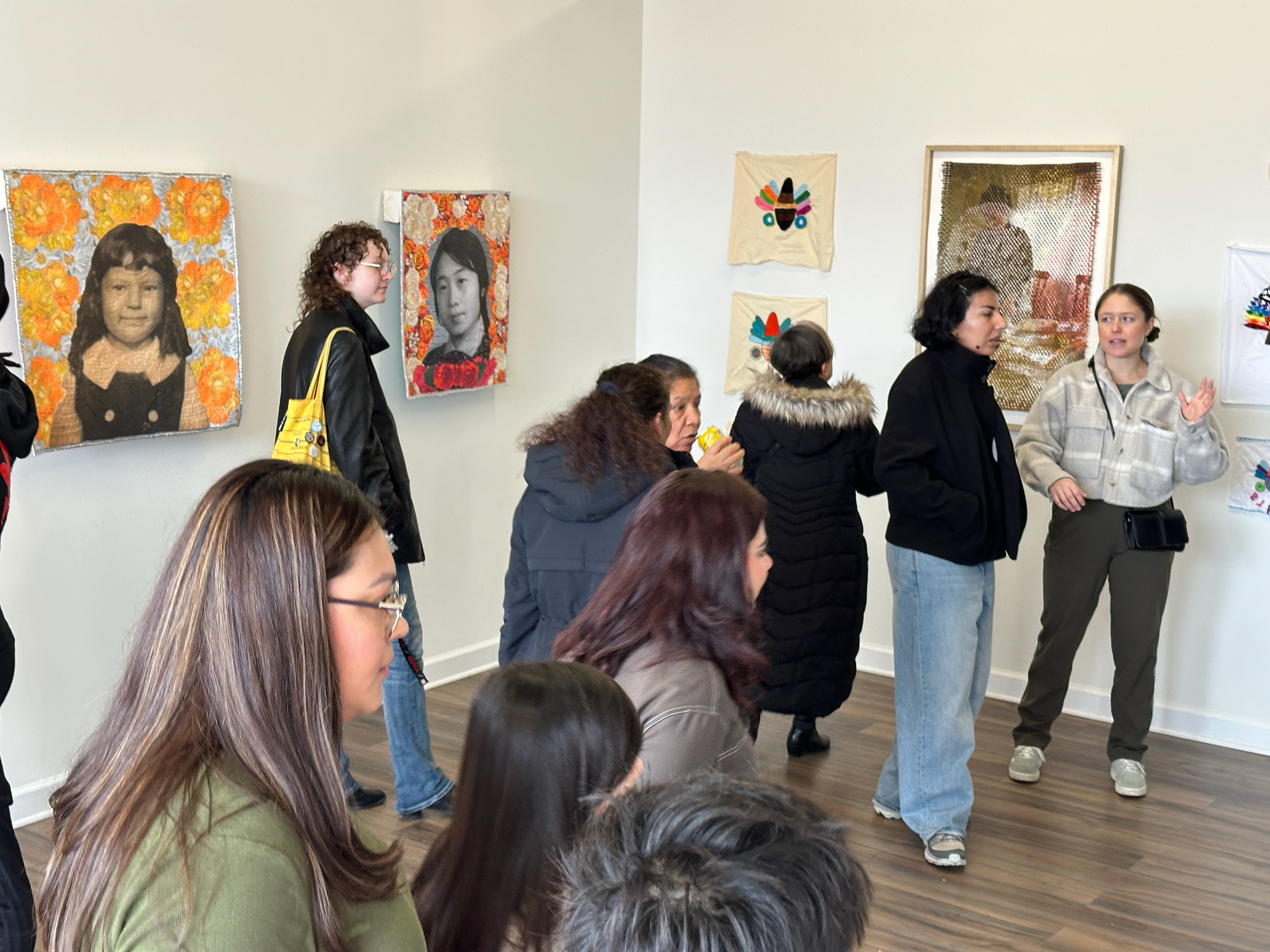
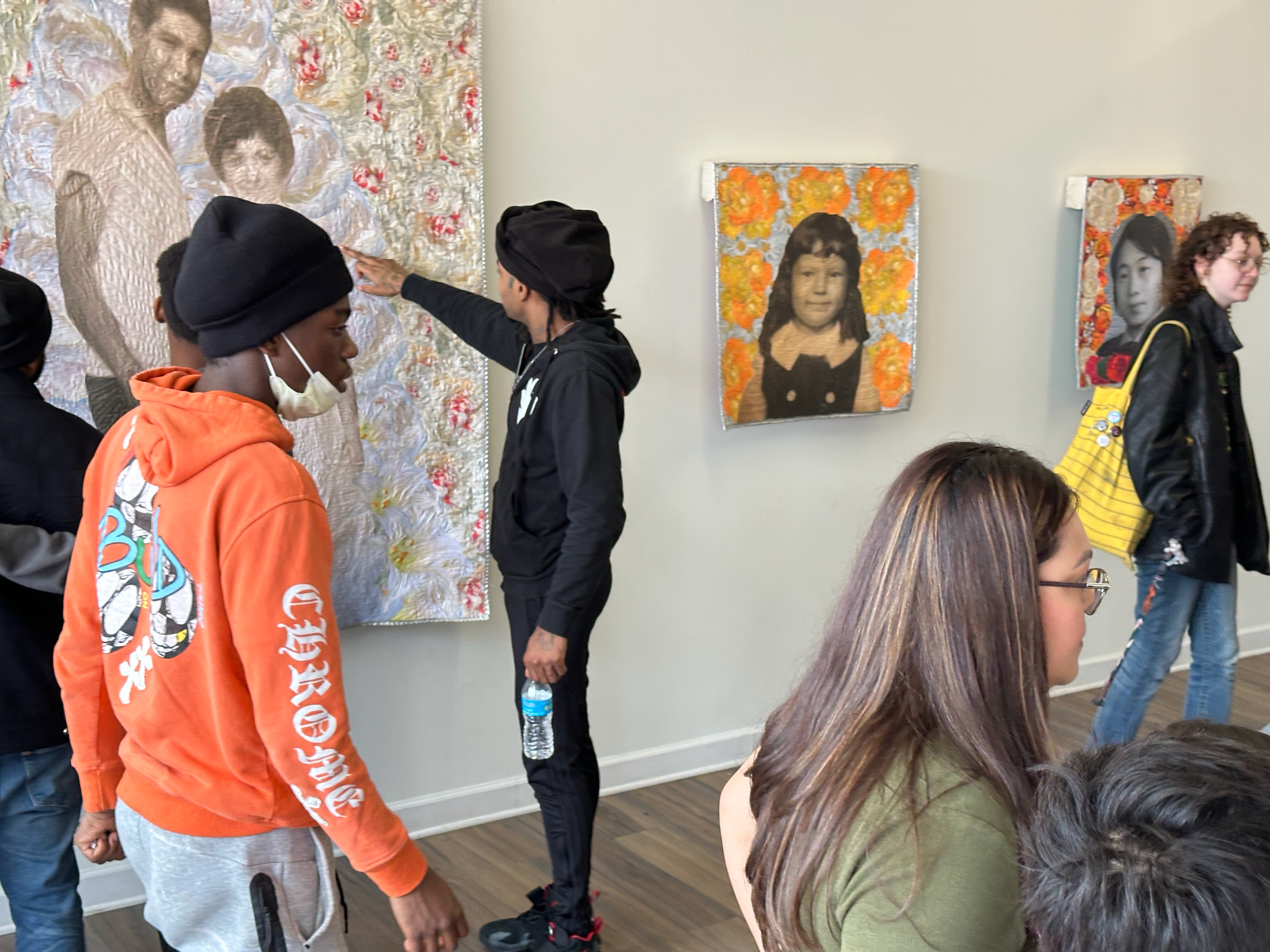
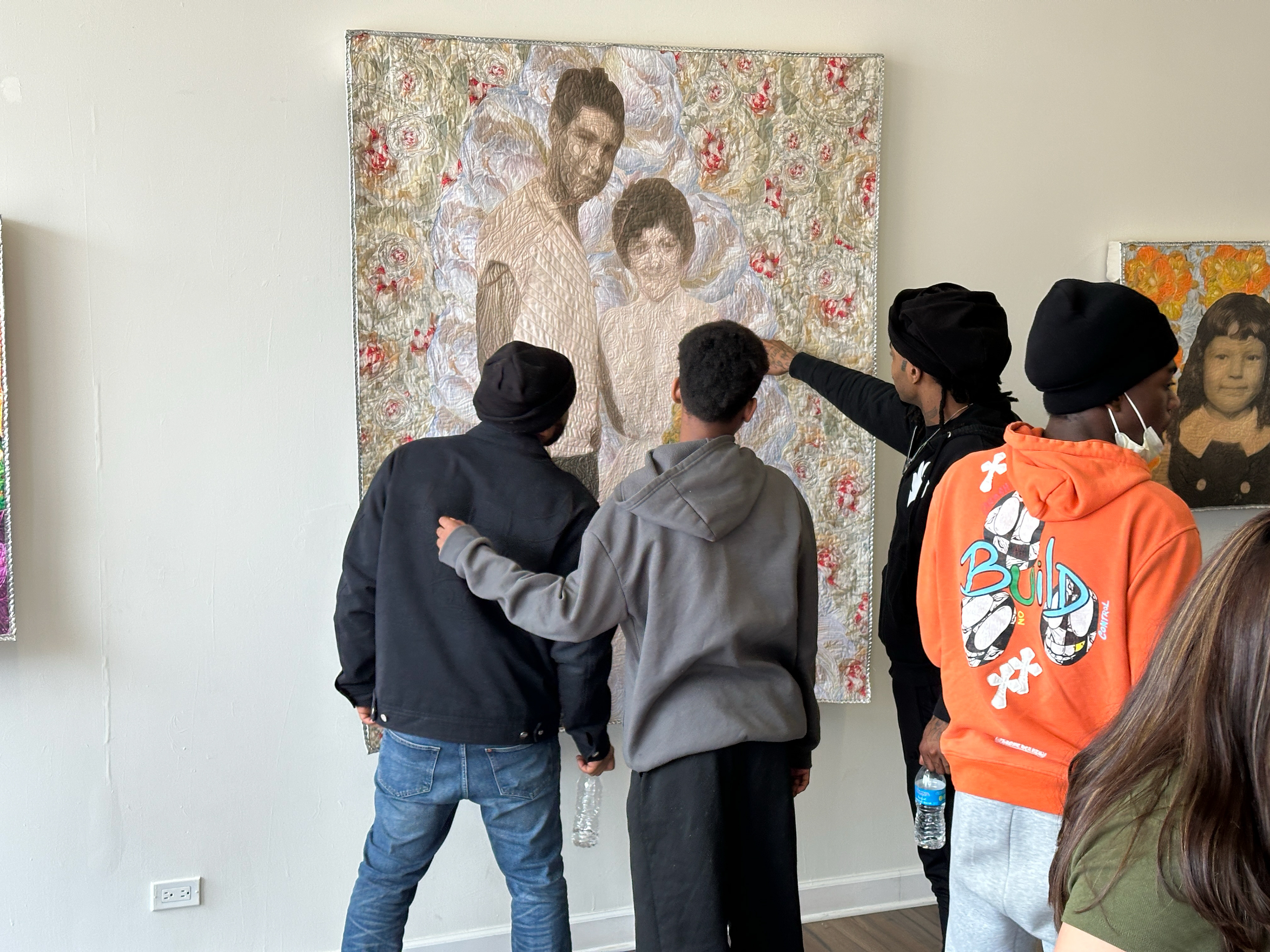
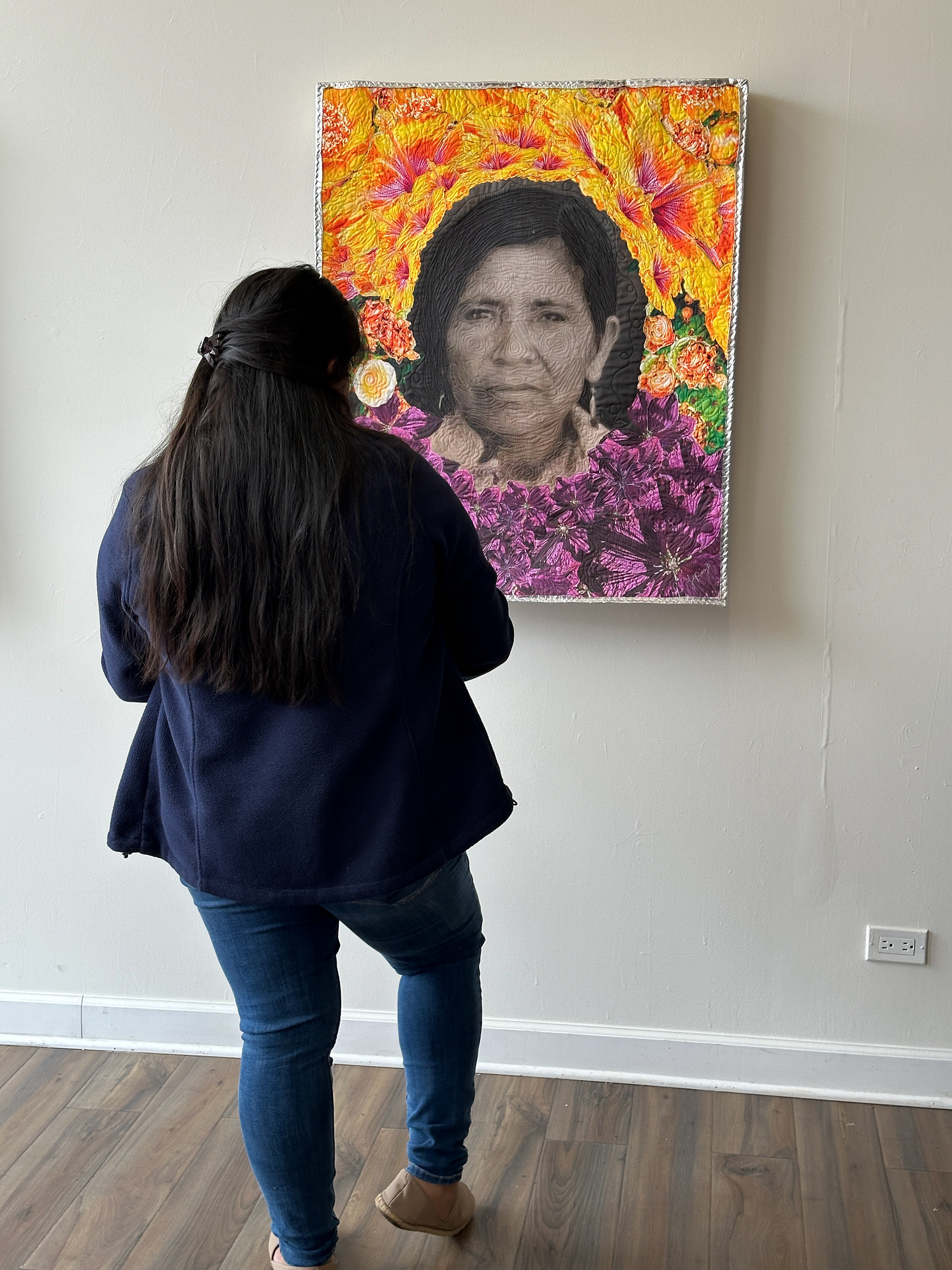
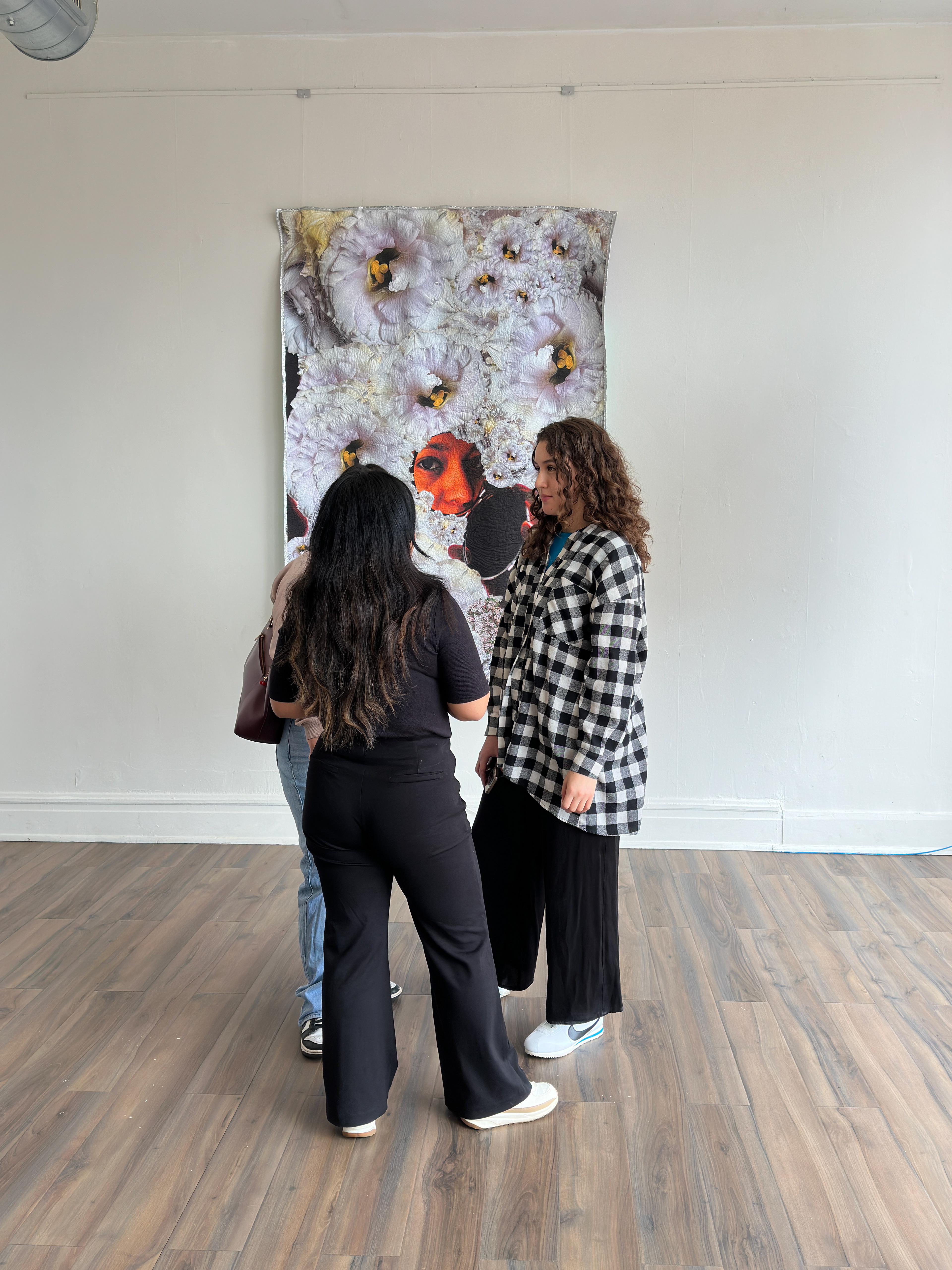
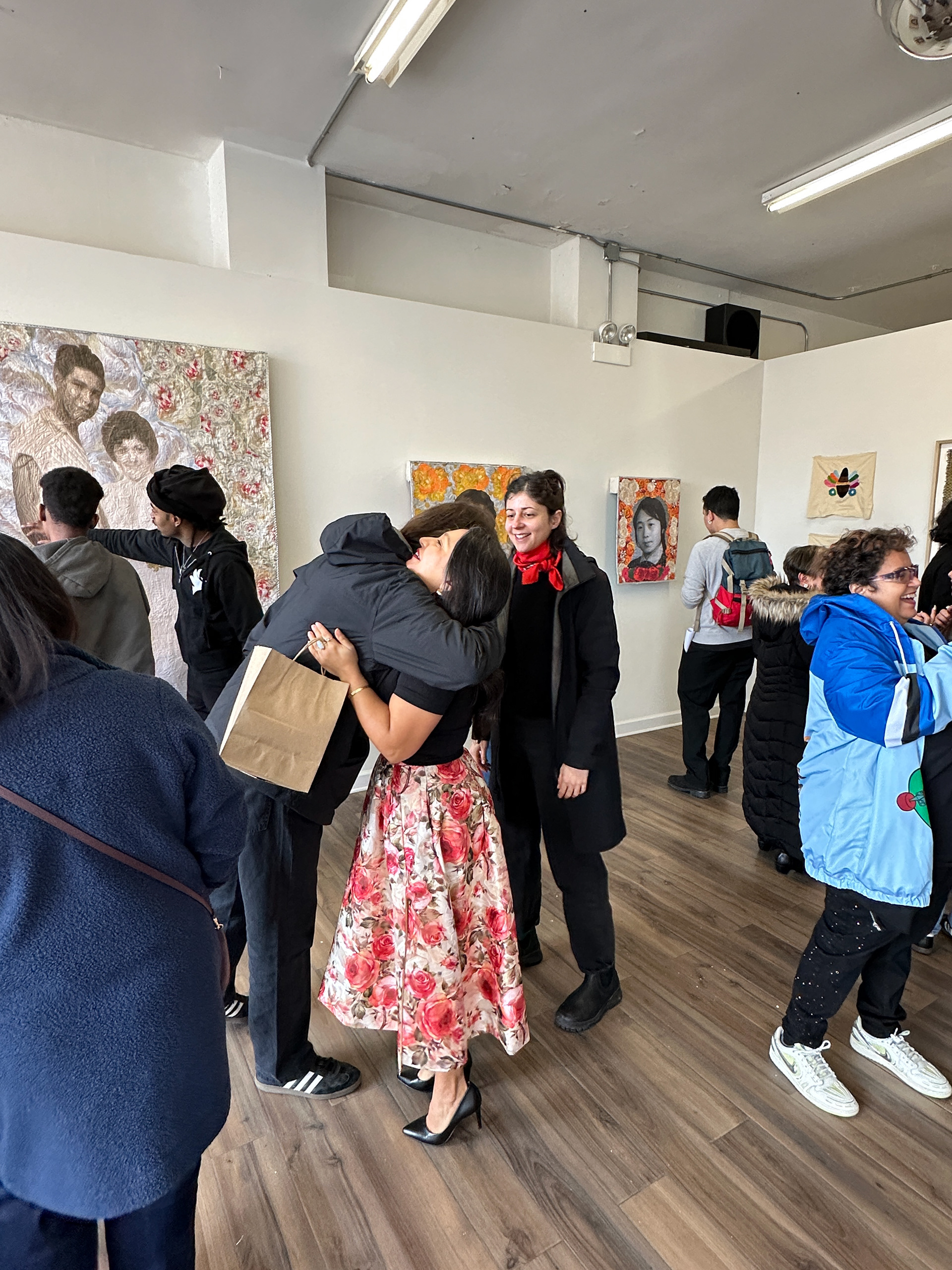
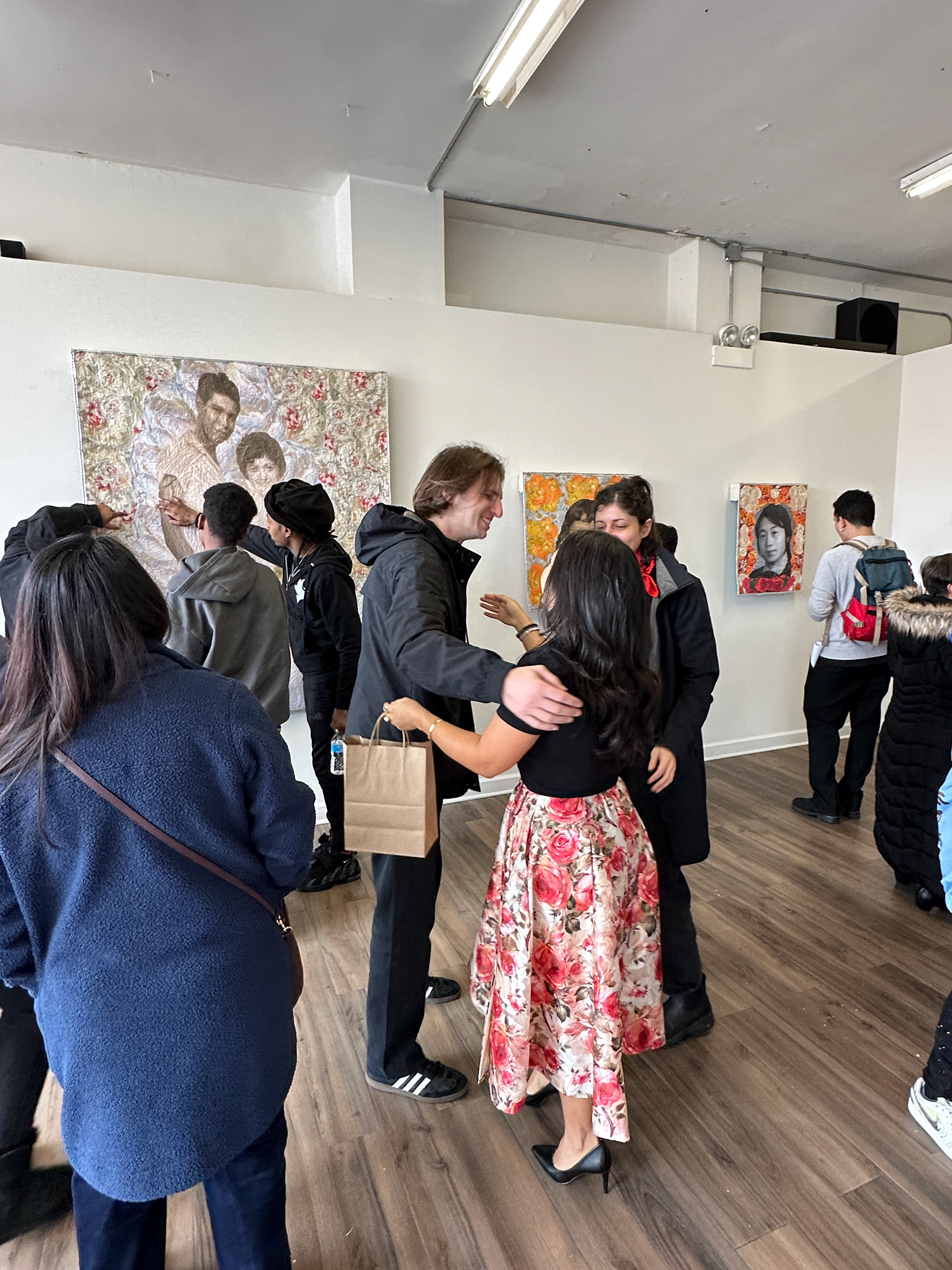
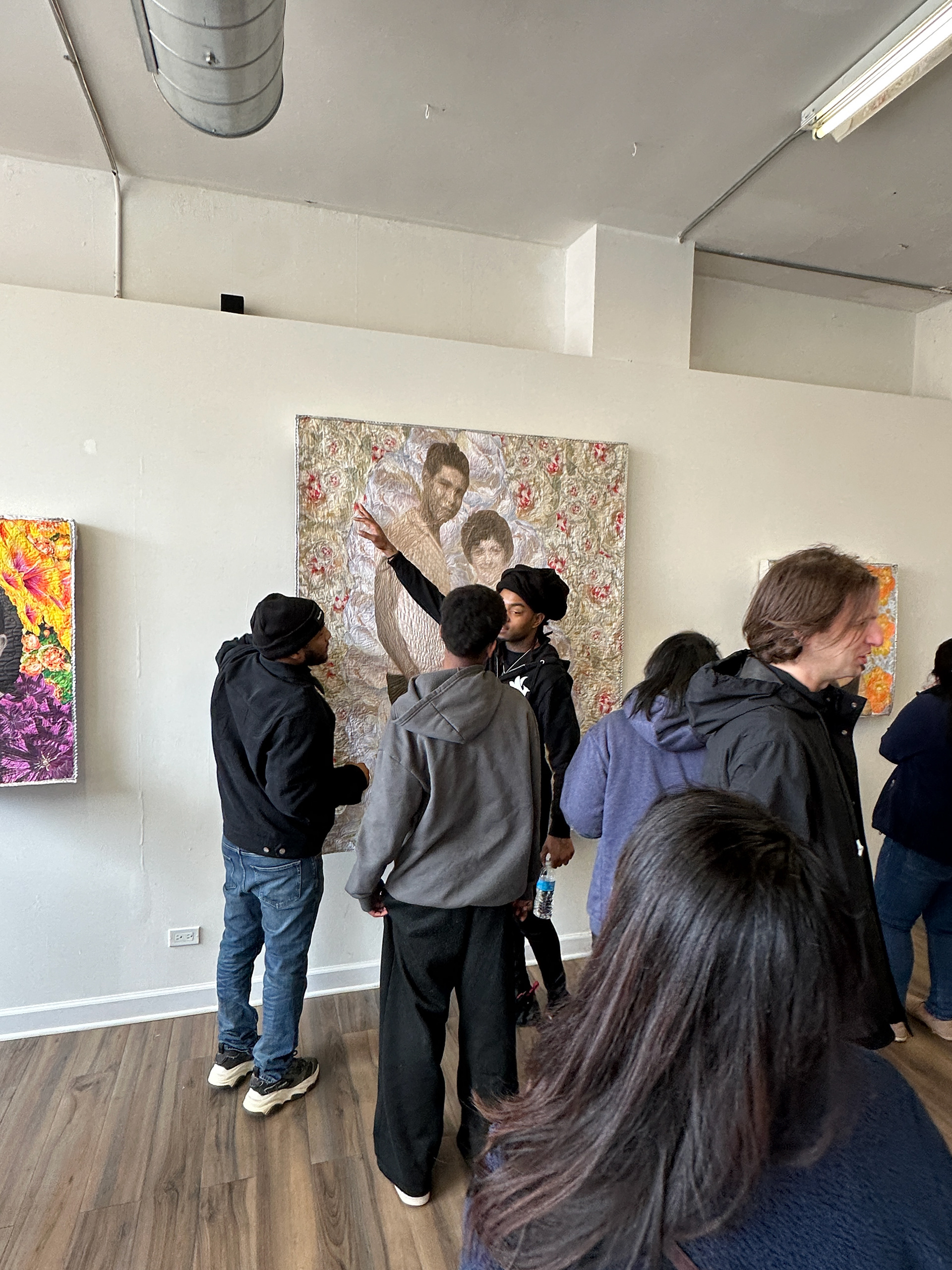
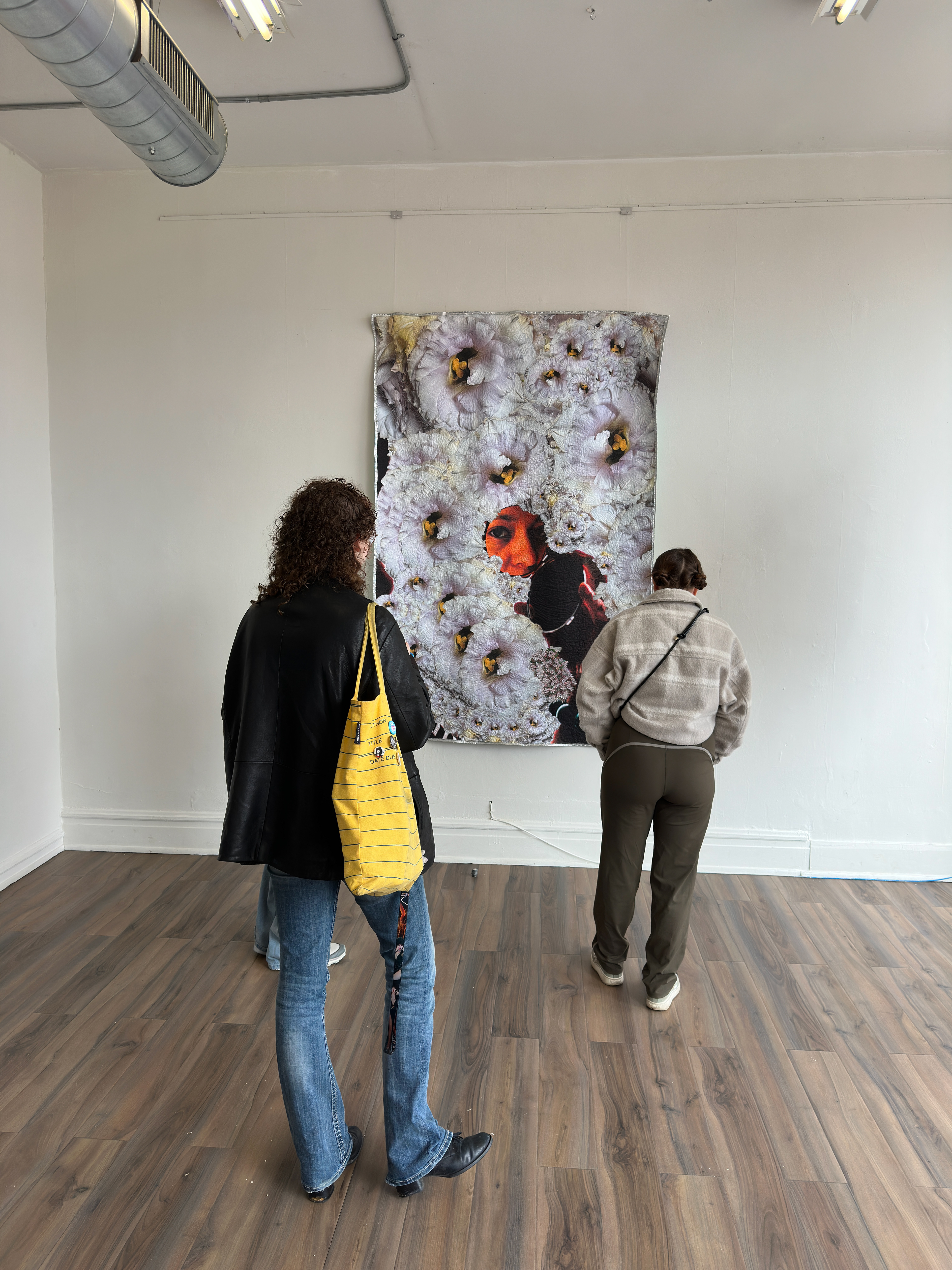
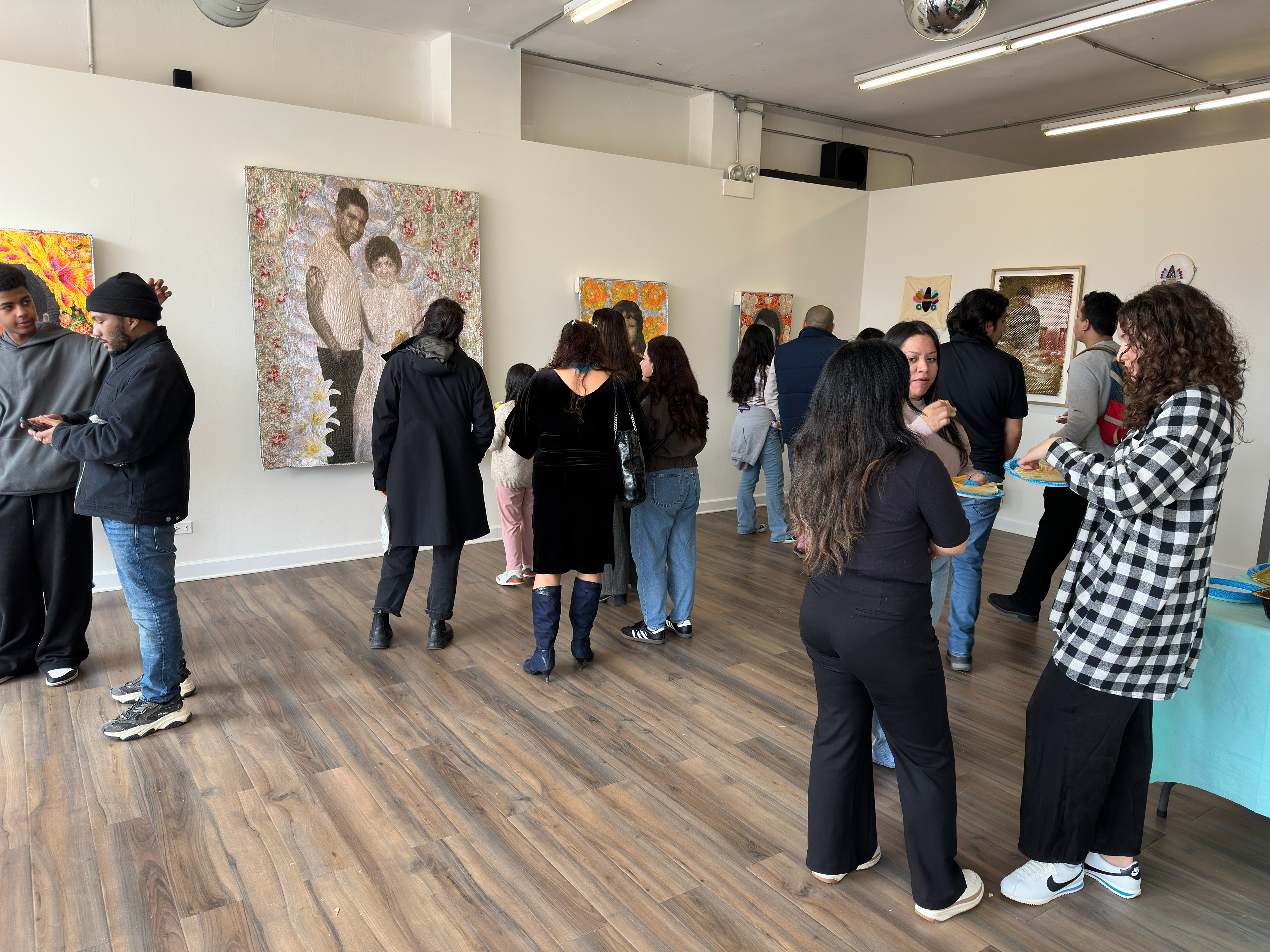
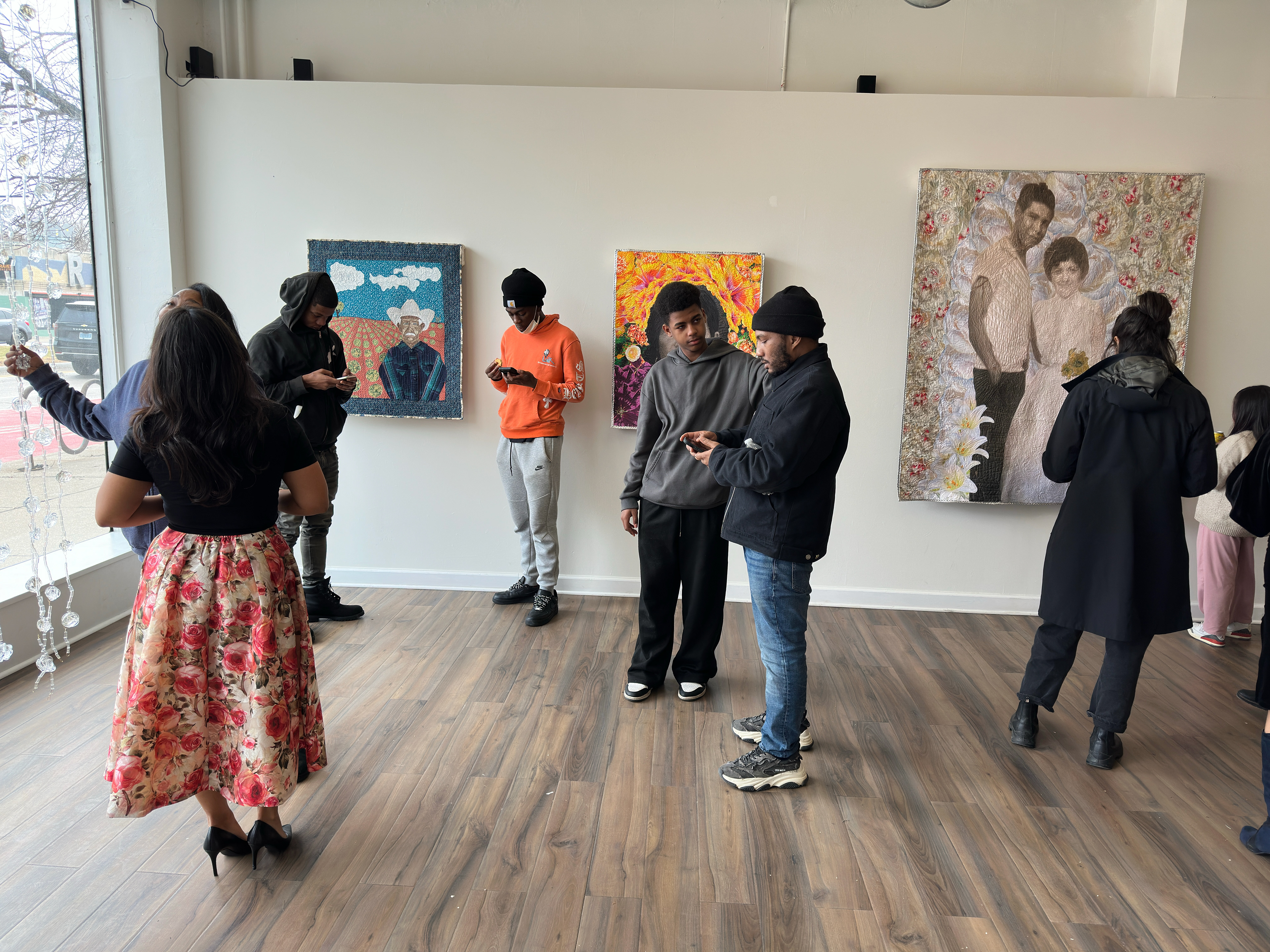
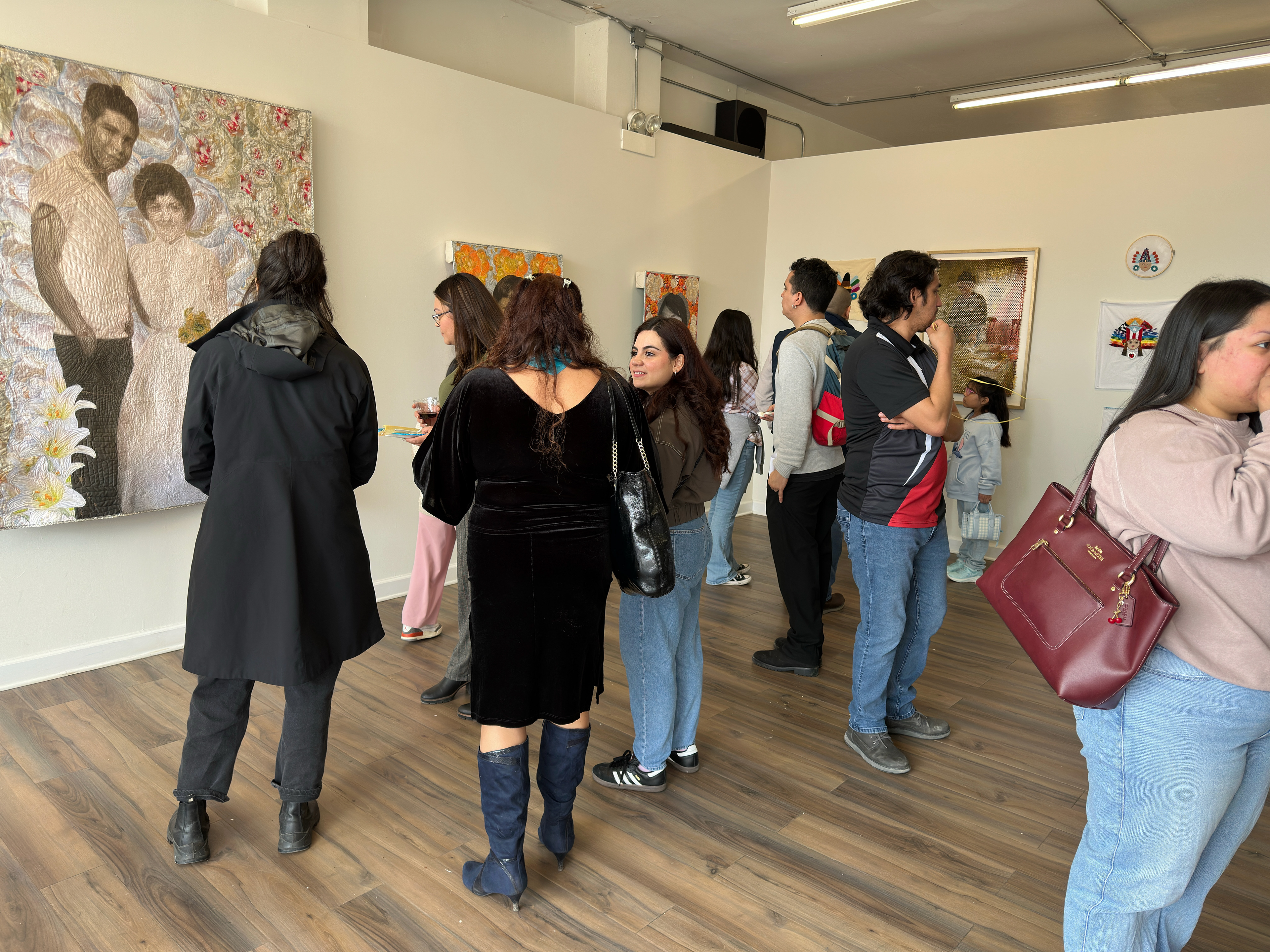
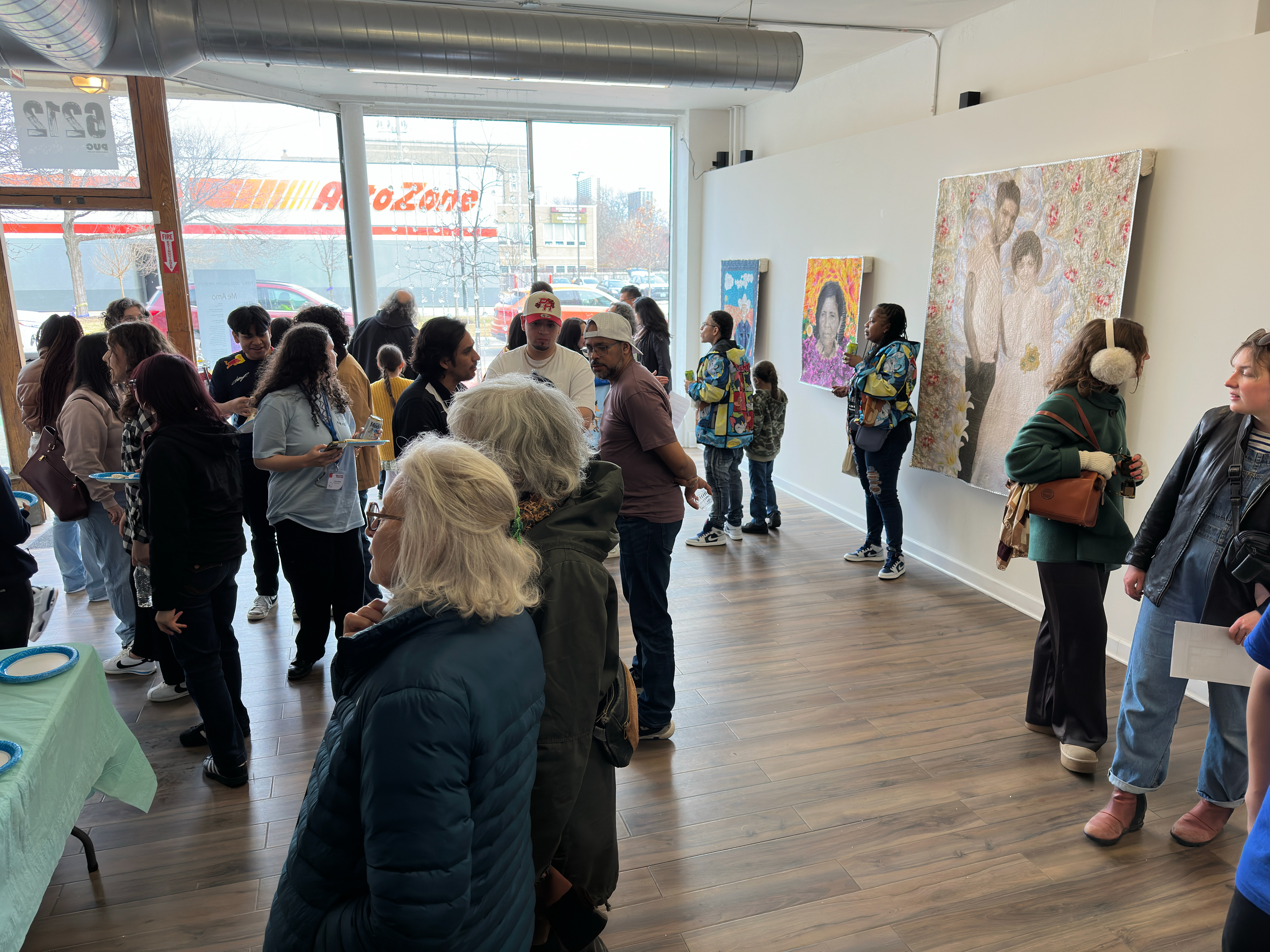
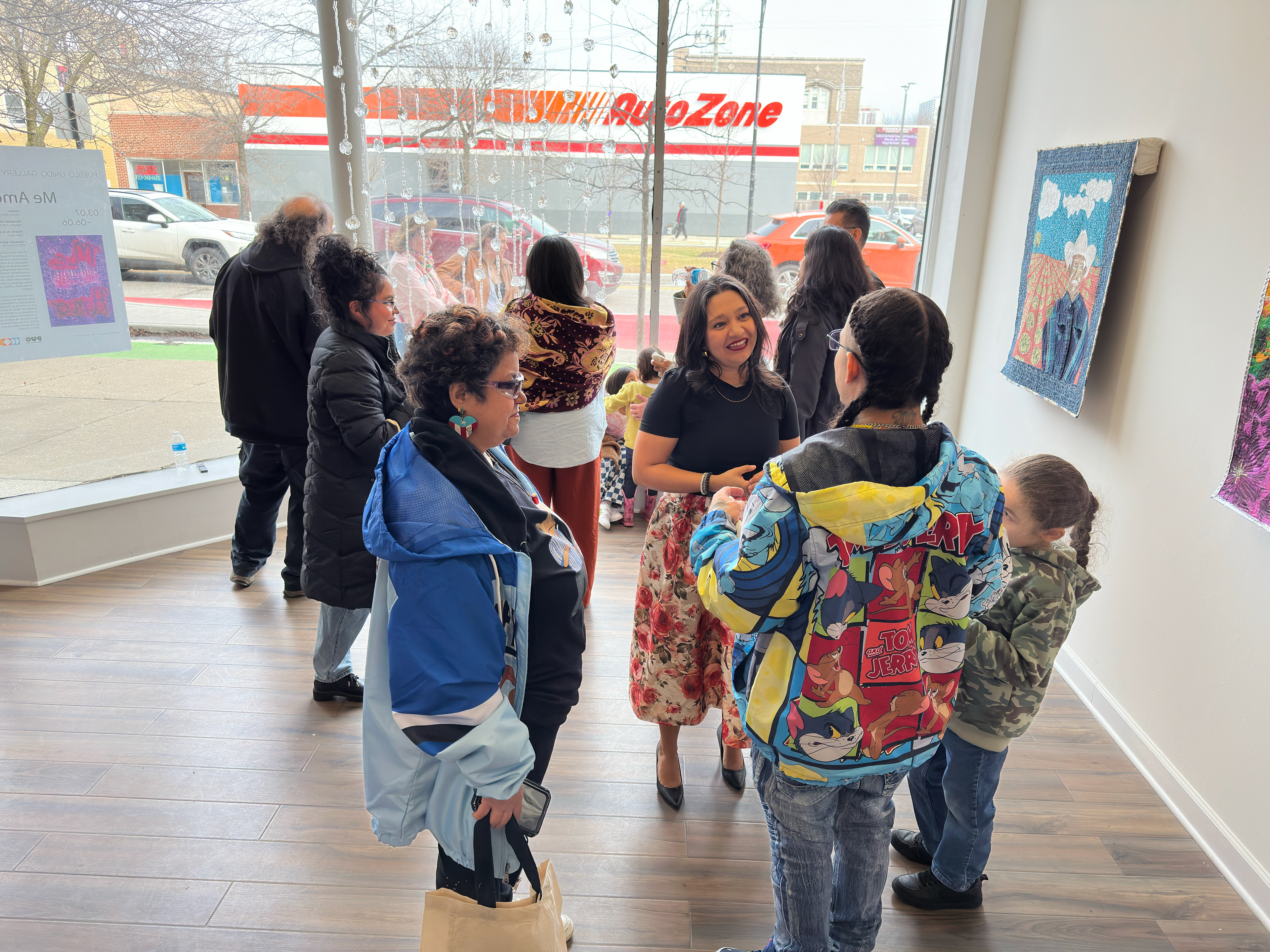
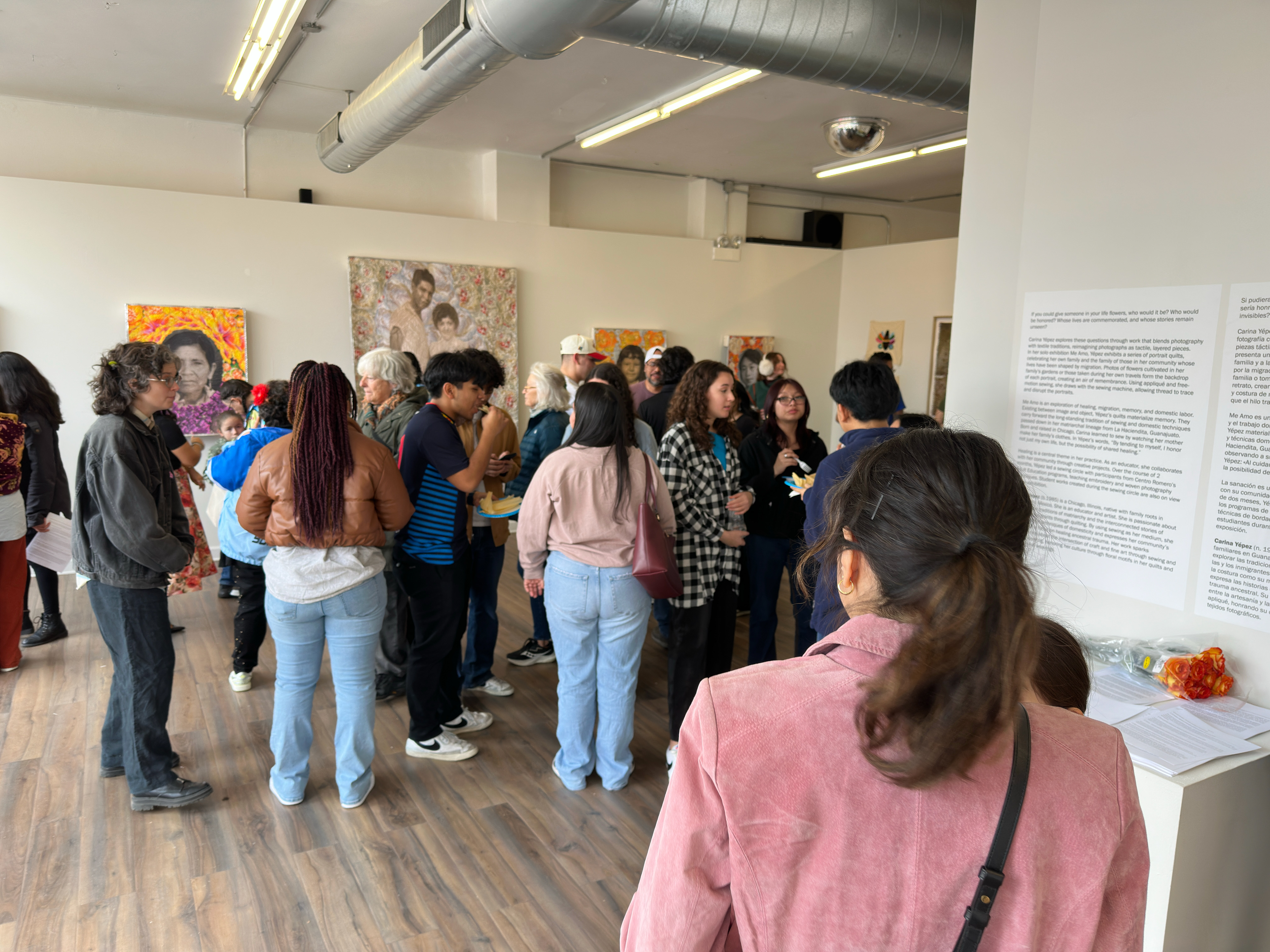
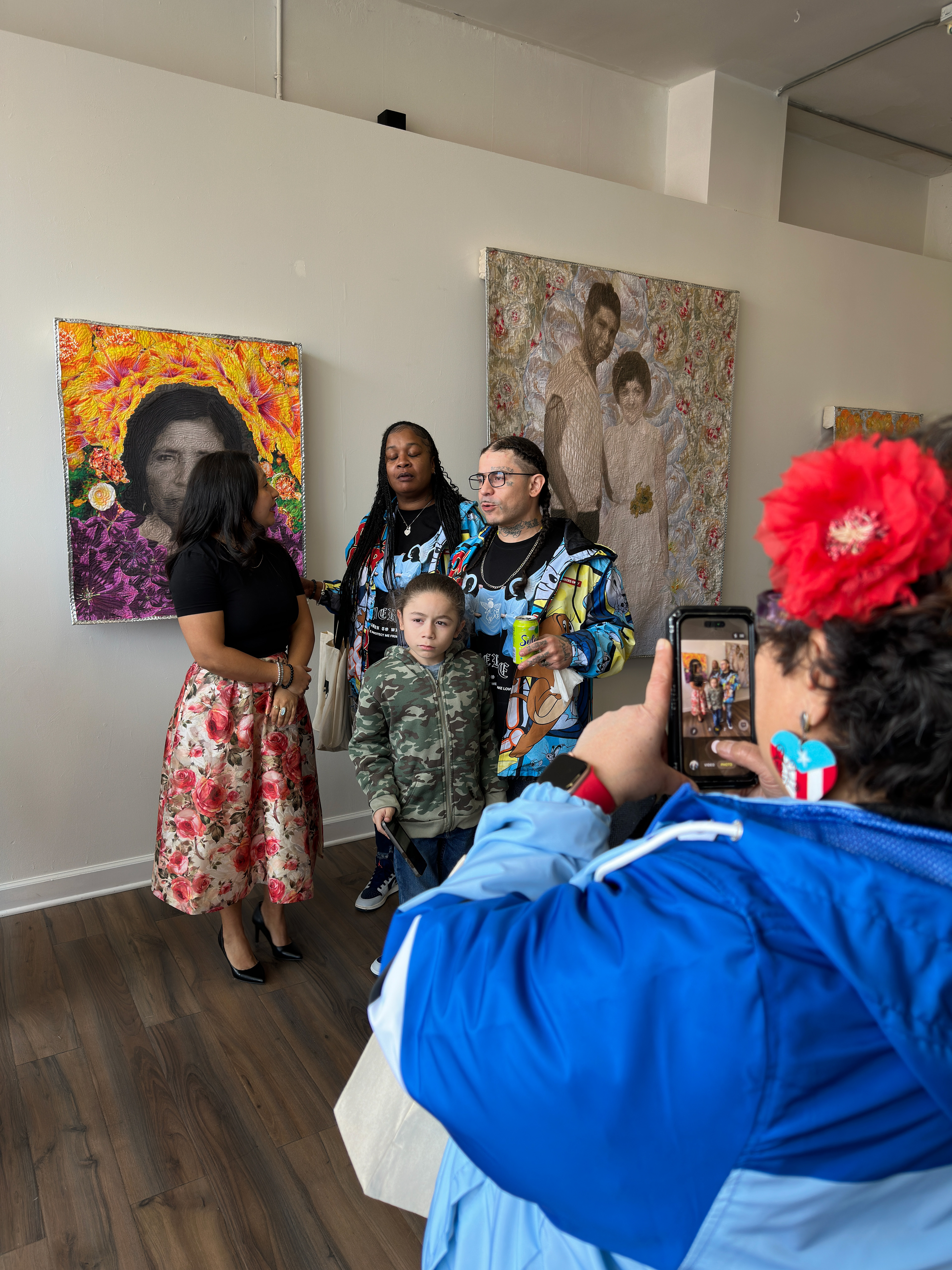
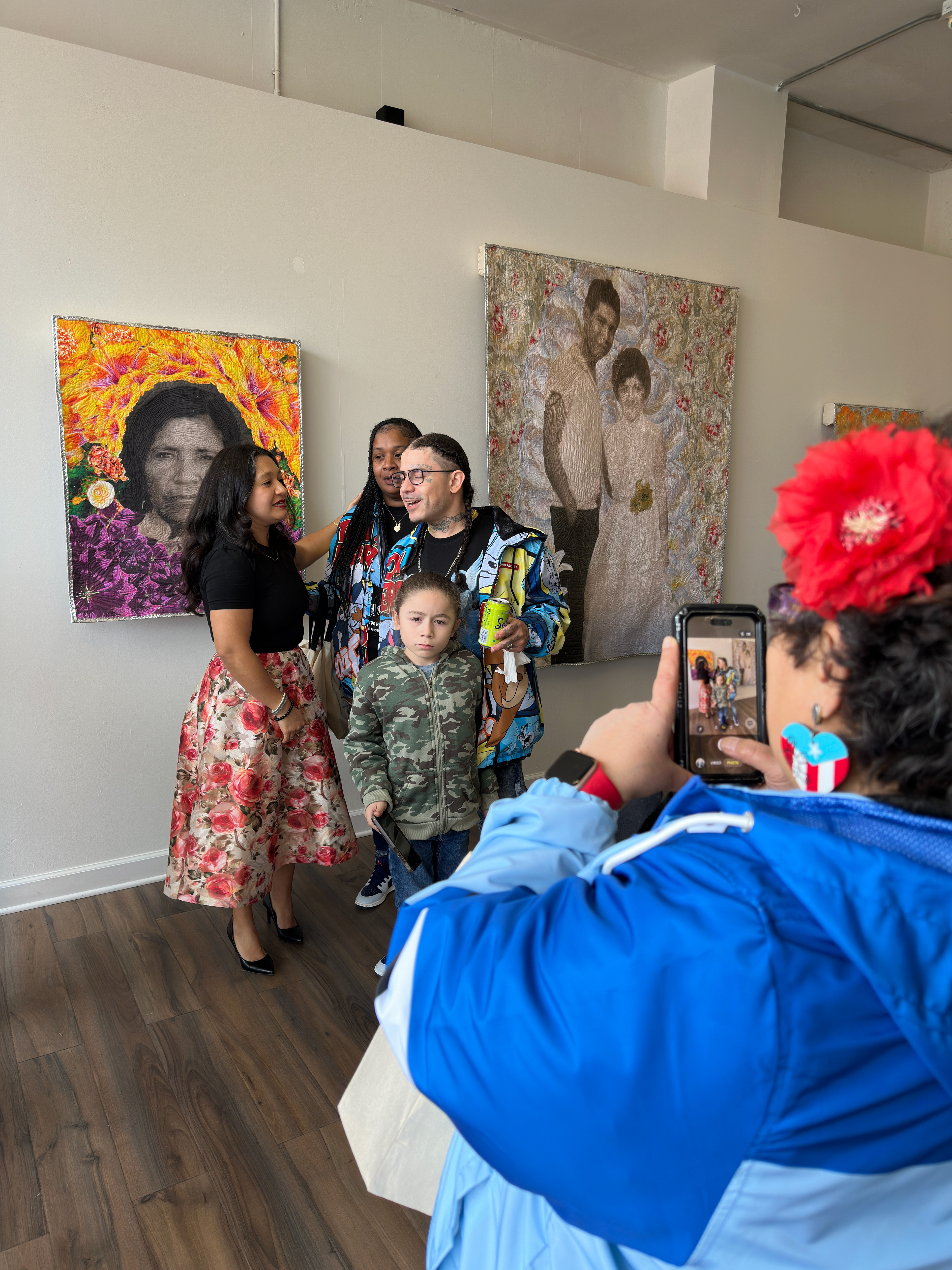
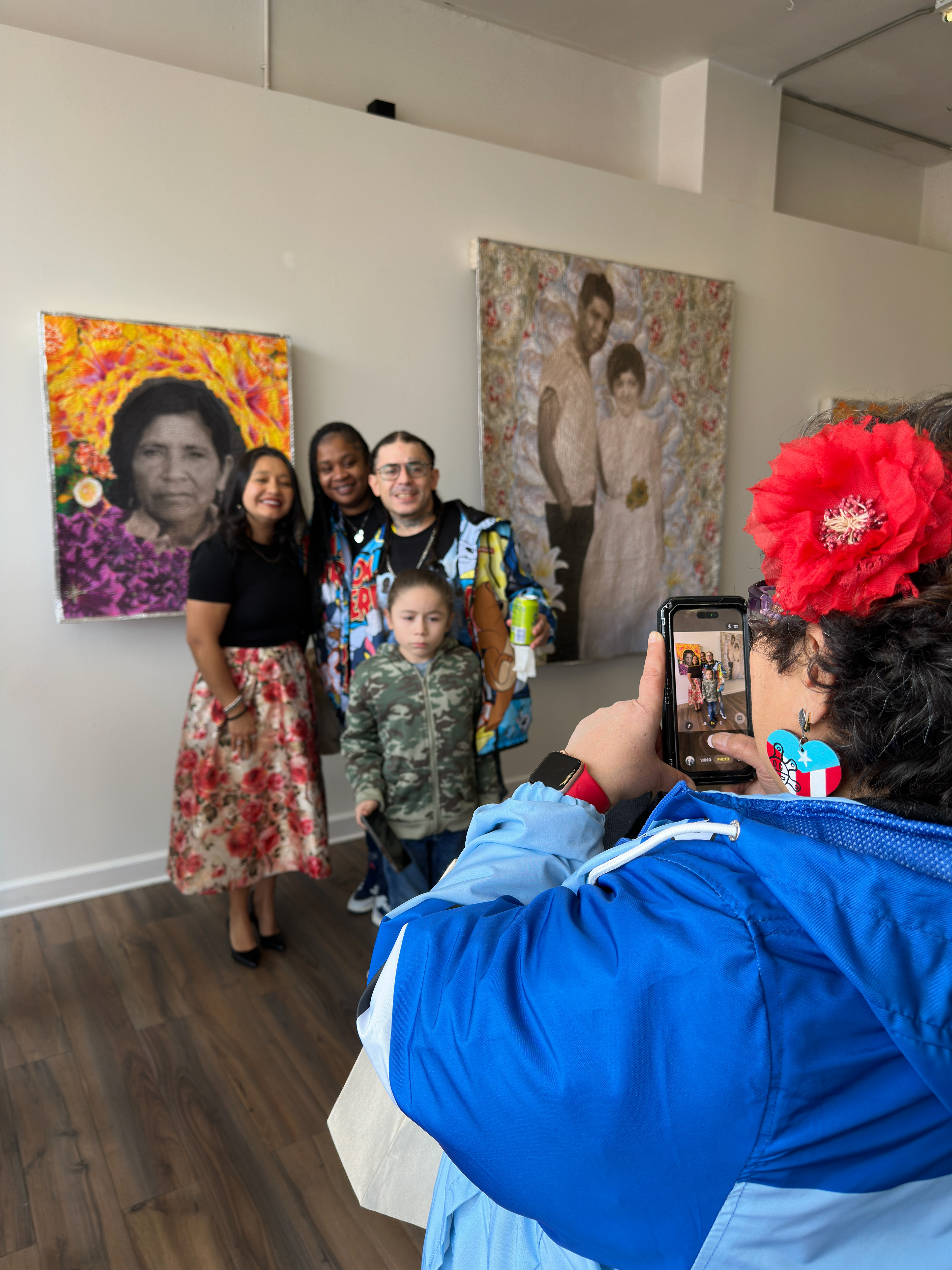
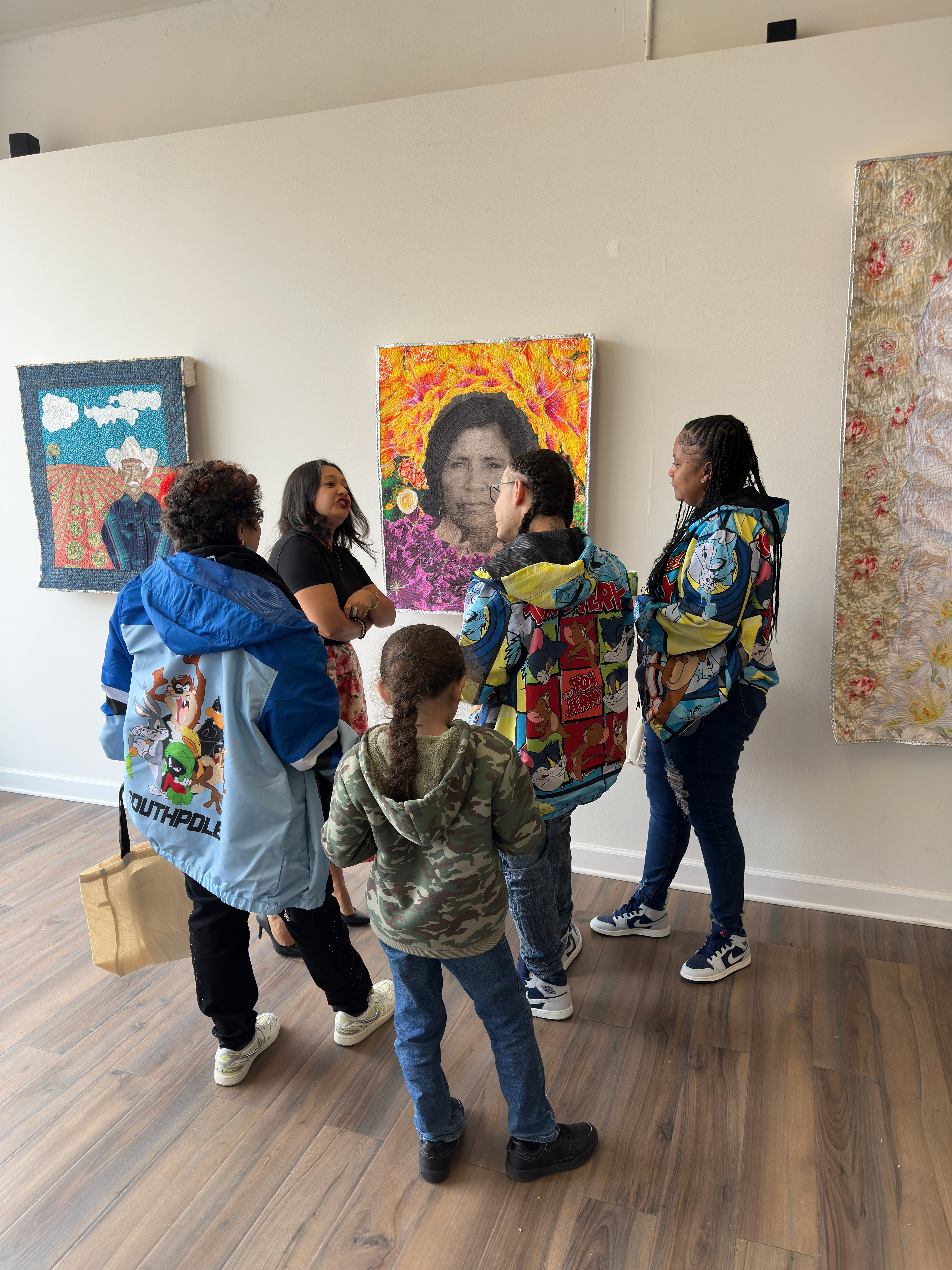
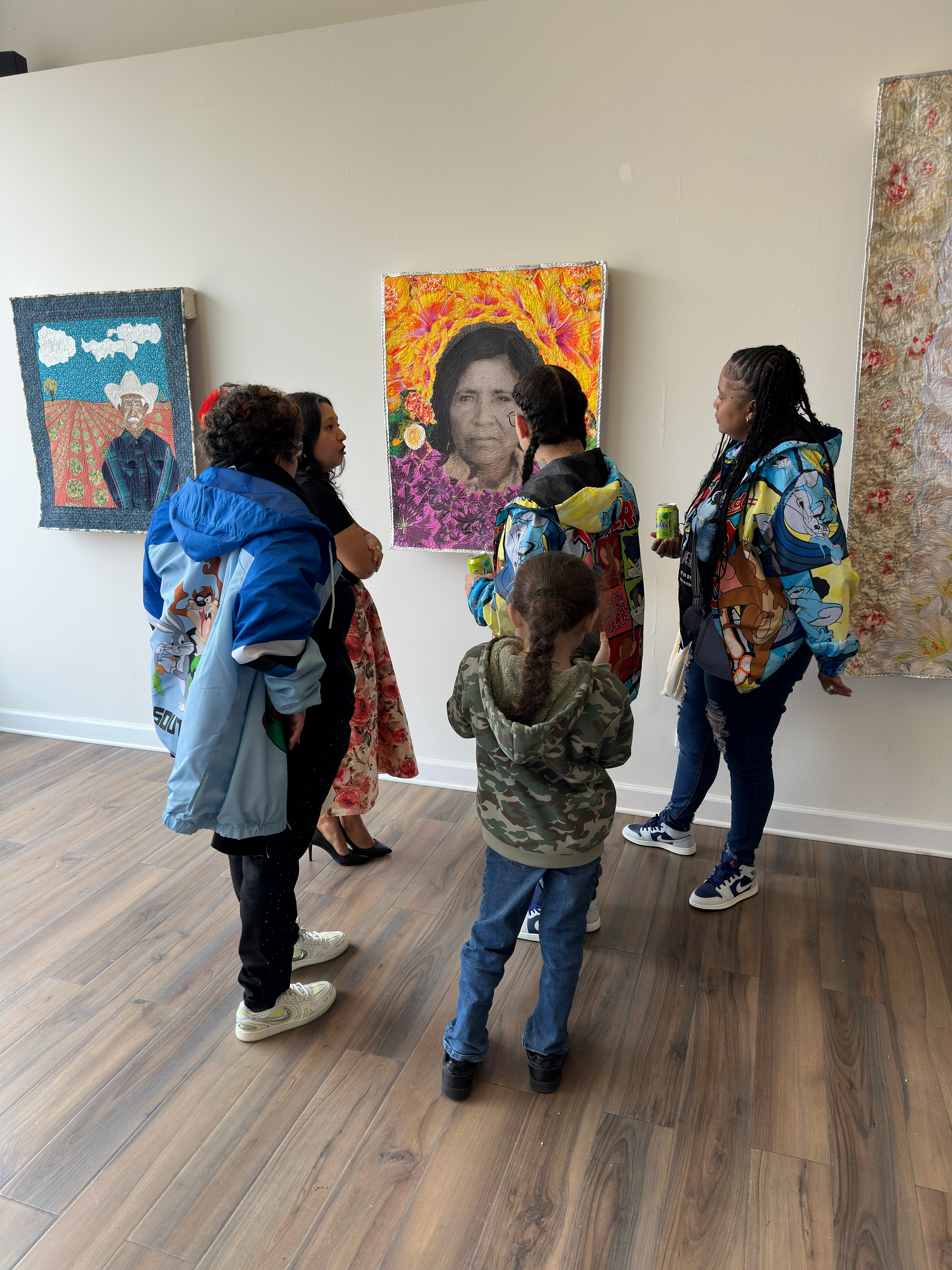
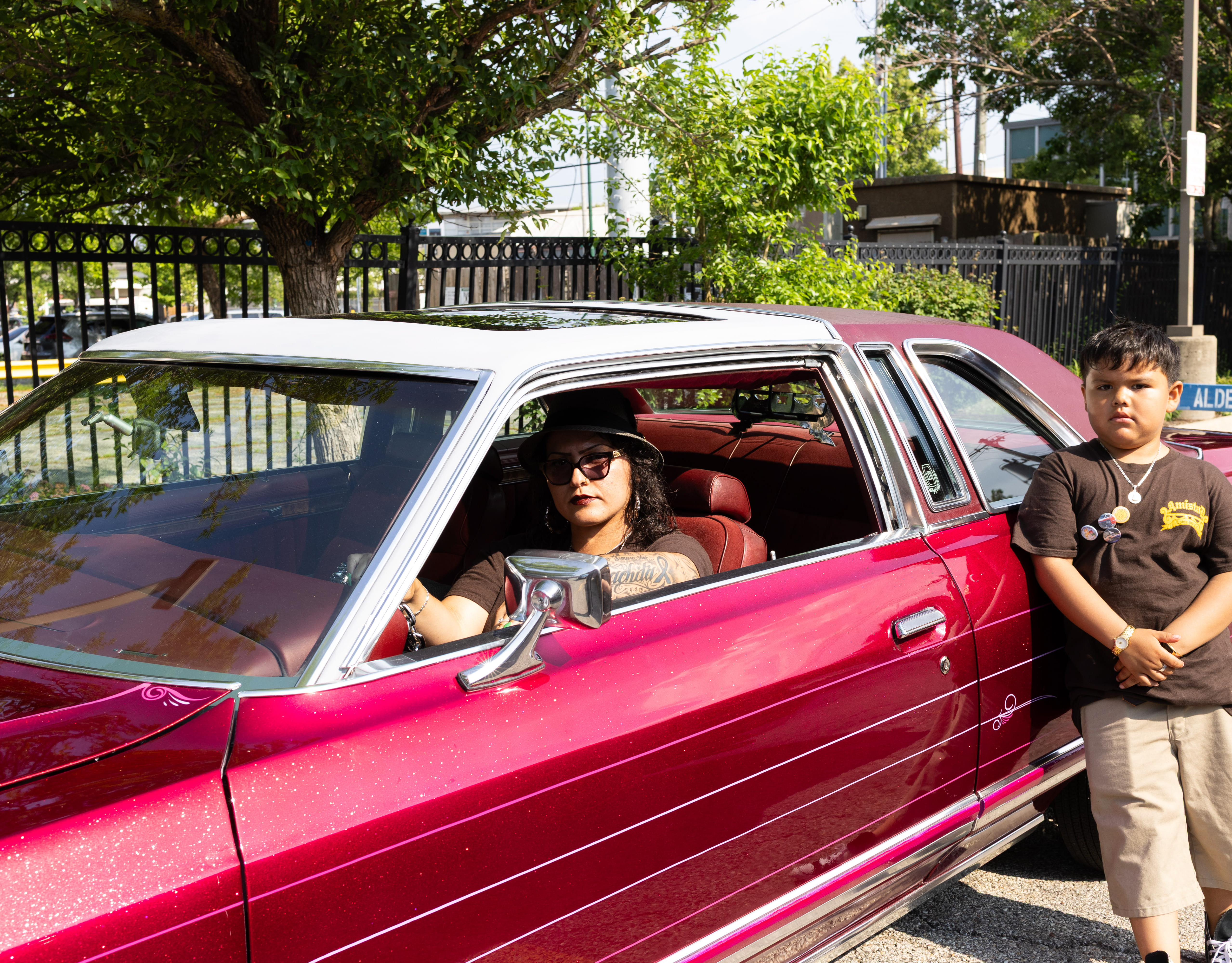
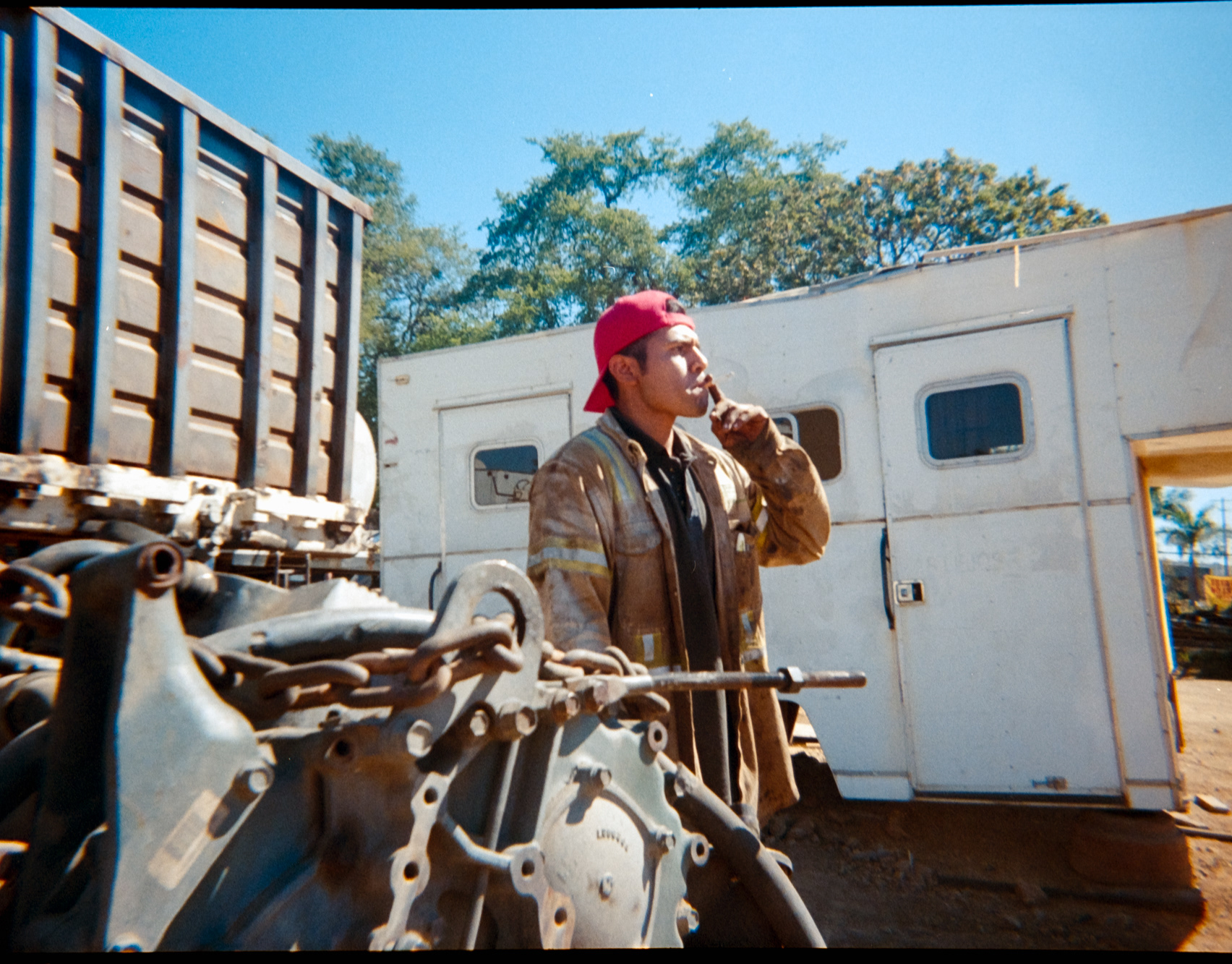
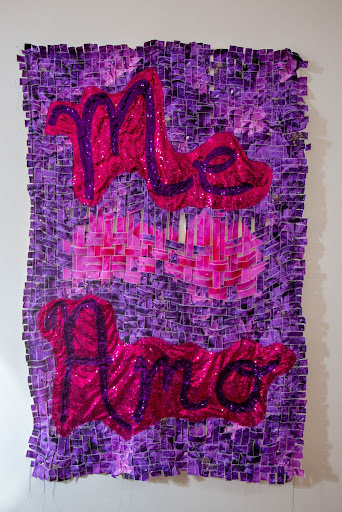
Carina Yépez explores these questions through work that blends photography with textile traditions, reimagining photographs as tactile, layered pieces. In her solo exhibition Me Amo, Yépez exhibits a series of portrait quilts, celebrating her own family and the family of those in her community whose lives have been shaped by migration. Photos of flowers cultivated in her family’s gardens or those taken during her own travels form the backdrop of each portrait, creating an air of remembrance. Using appliqué and free-motion sewing, she draws with the sewing machine, allowing thread to trace and disrupt the portraits.
“By tending to myself, I honor not just my own life, but the possibility of shared healing.”
Me Amo is an exploration of healing, migration, memory, and domestic labor. Existing between image and object, Yépez’s quilts materialize memory. They carry forward the long-standing tradition of sewing and domestic techniques passed down in her matriarchal lineage from La Haciendita, Guanajuato. Born and raised in Chicago, Carina learned to sew by watching her mother make her family’s clothes. In Yépez's words, "By tending to myself, I honor not just my own life, but the possibility of shared healing."
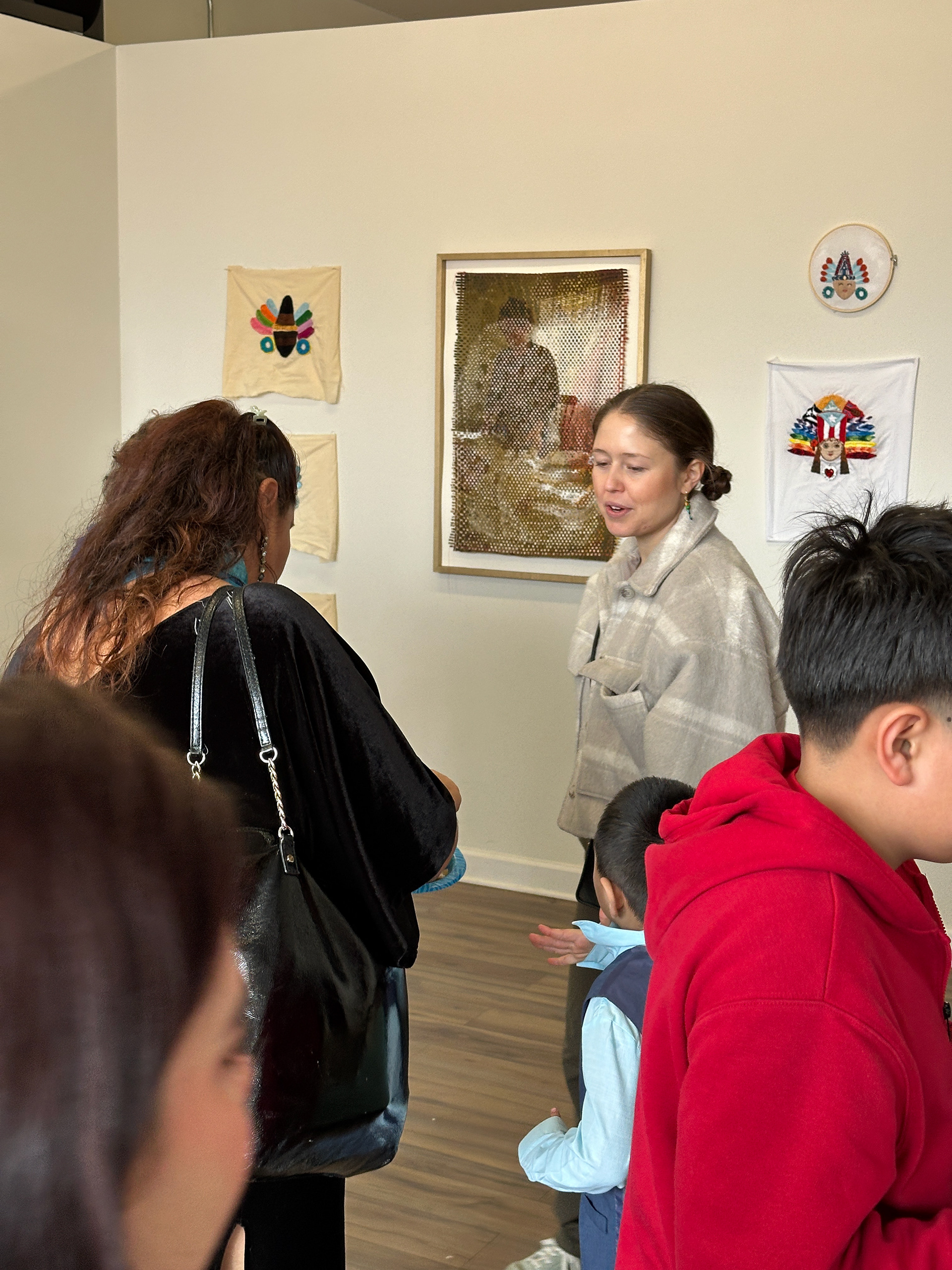
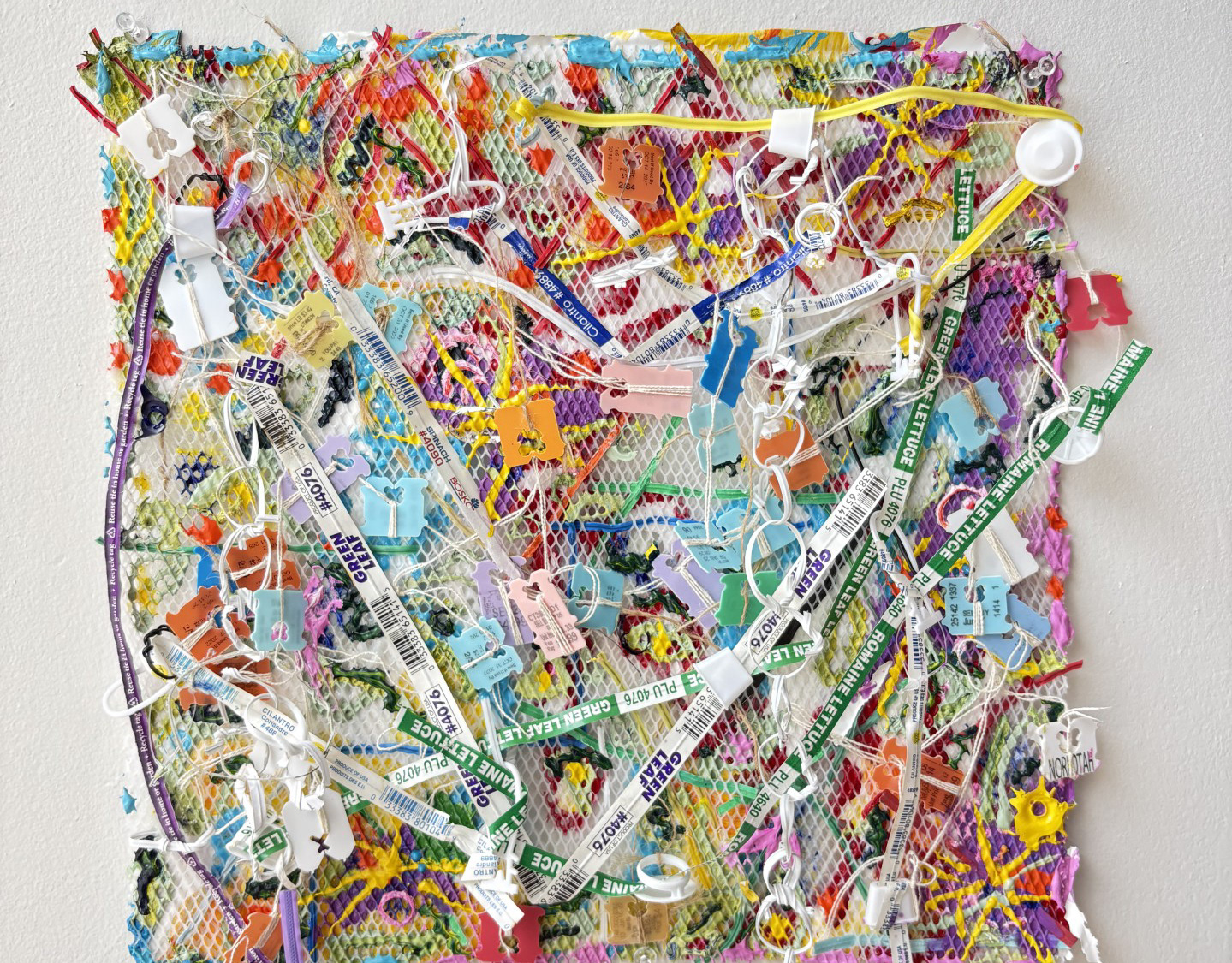
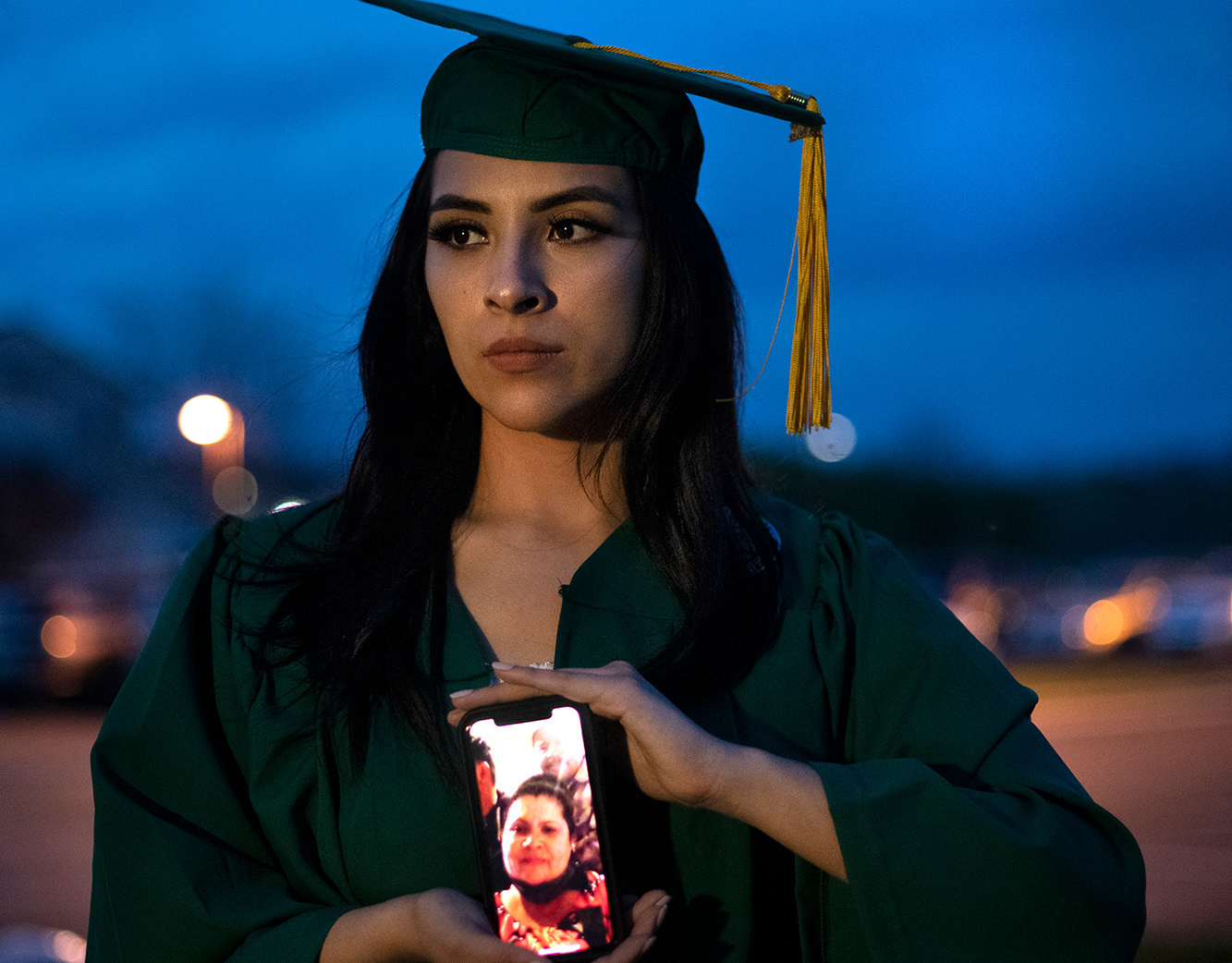
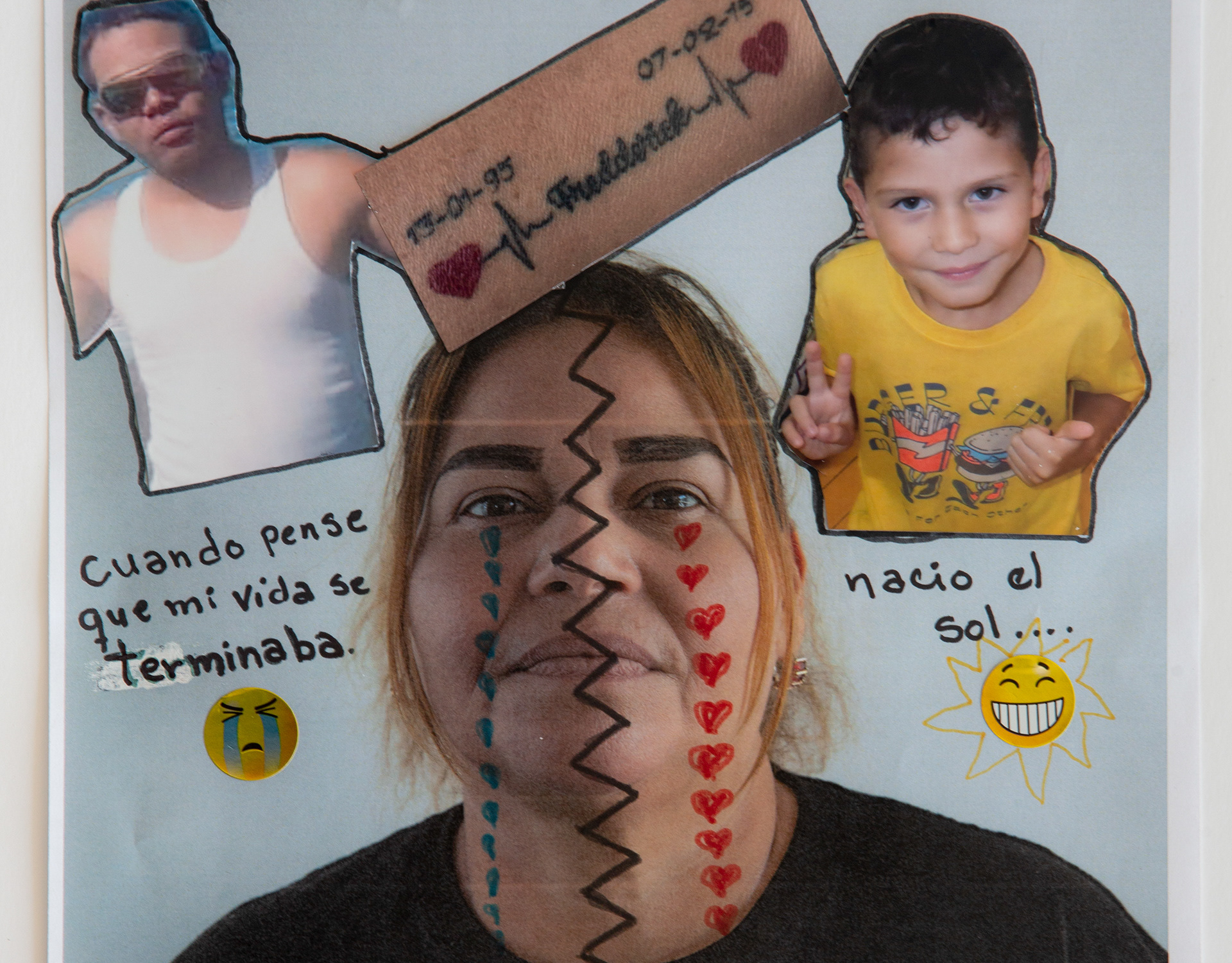
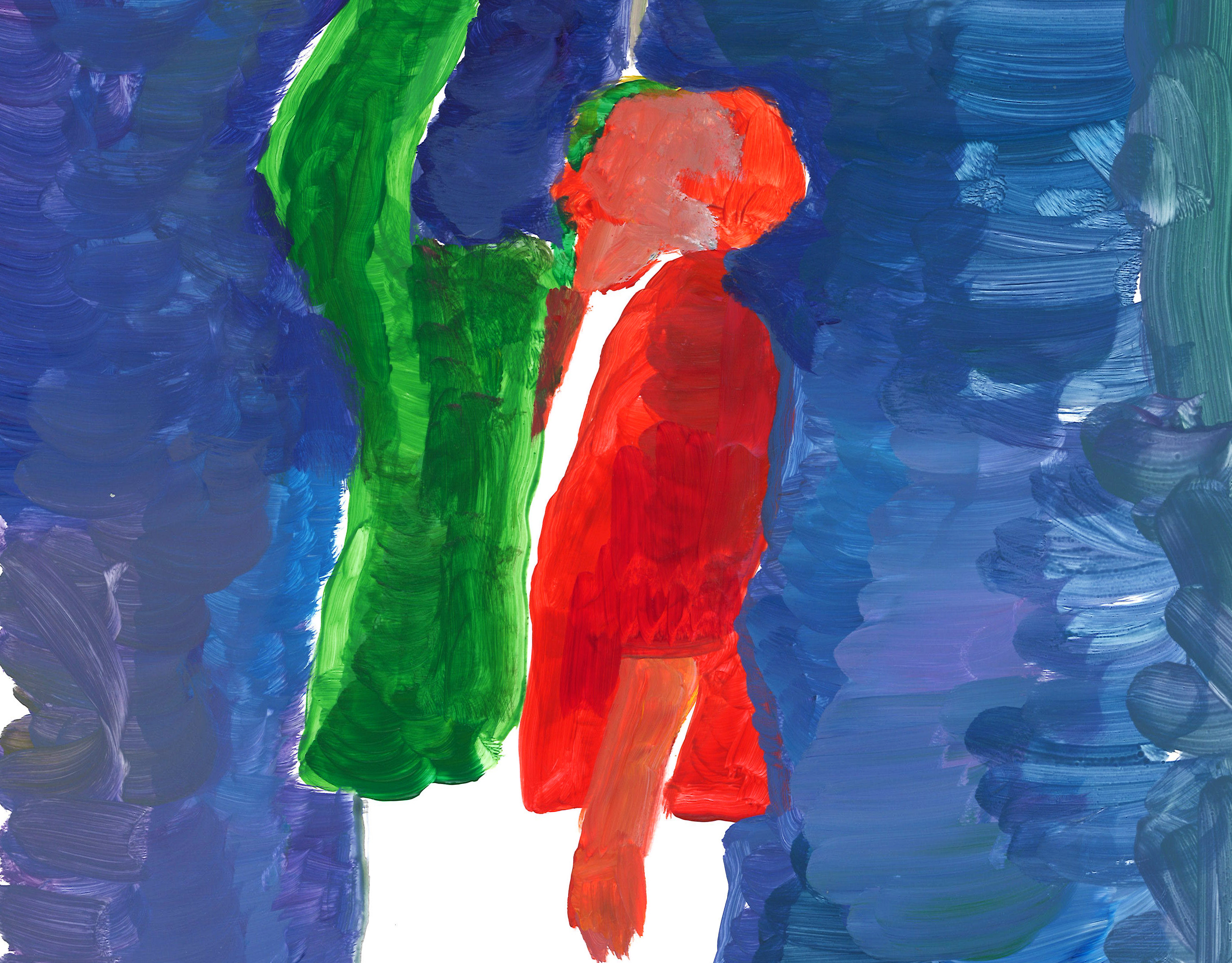
Healing is a central theme in her practice. As an educator, she collaborates with her community through creative projects. Over the course of 2 months, Yépez led a sewing circle with participants from Centro Romero's Adult Education programs, teaching embroidery and woven photography techniques. Student works created during the sewing circle are also on view in the exhibition.
Carina Yepez (b.1985) is Chicago, Illinois, native with family roots in Guanajuato, Mexico. She is an educator and artist. She is passionate about exploring the traditions of matriarchy and the interconnected stories of Chicago im/migrants through quilting. By using sewing as her medium, she delves into the techniques of domesticity and expresses her community's stories with a focus on healing ancestral trauma. Her work sparks conversations about the intersection of craft and fine art through sewing and appliqué layering, honoring her culture through floral motifs in her quilts and photographic weavings.